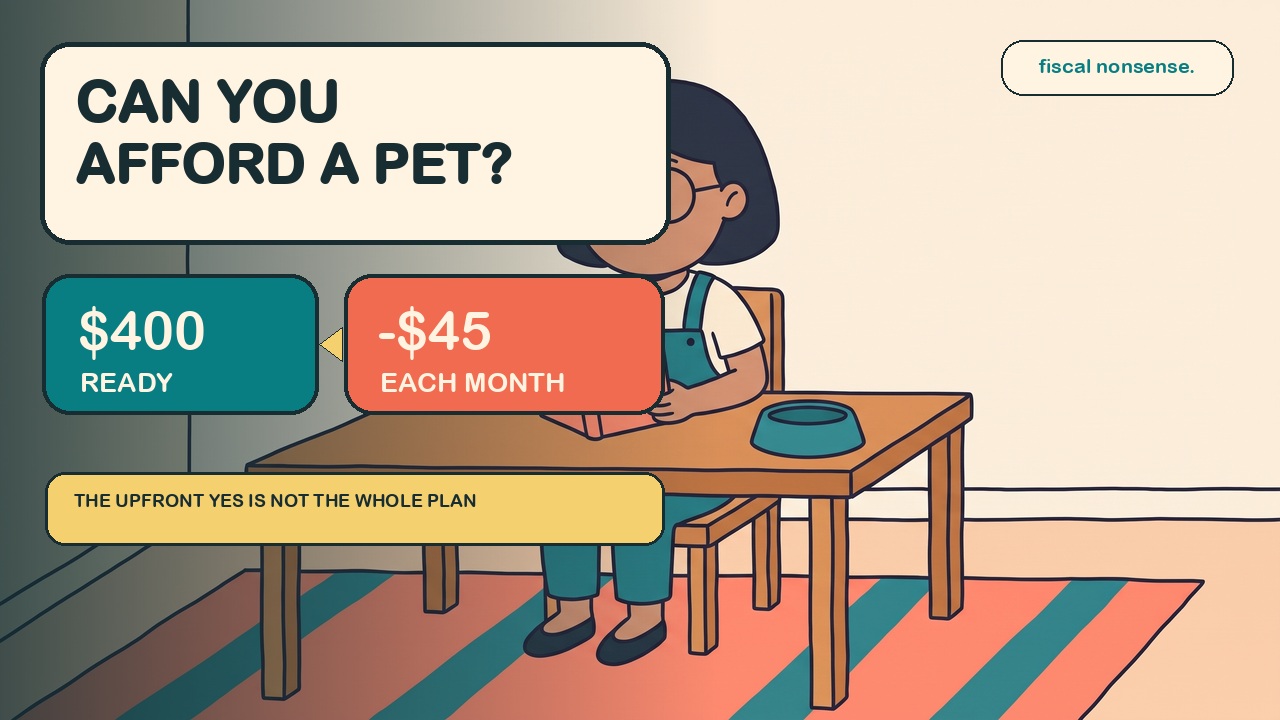
Can You Afford a Pet? The Cost That Comes Home Every Month
A $400 setup can fit the savings while a fictional pet-care plan is still $45 over Maya’s monthly room. Use four cost buckets before making the plan.
 fiscal
Finance videos / Budgeting & saving
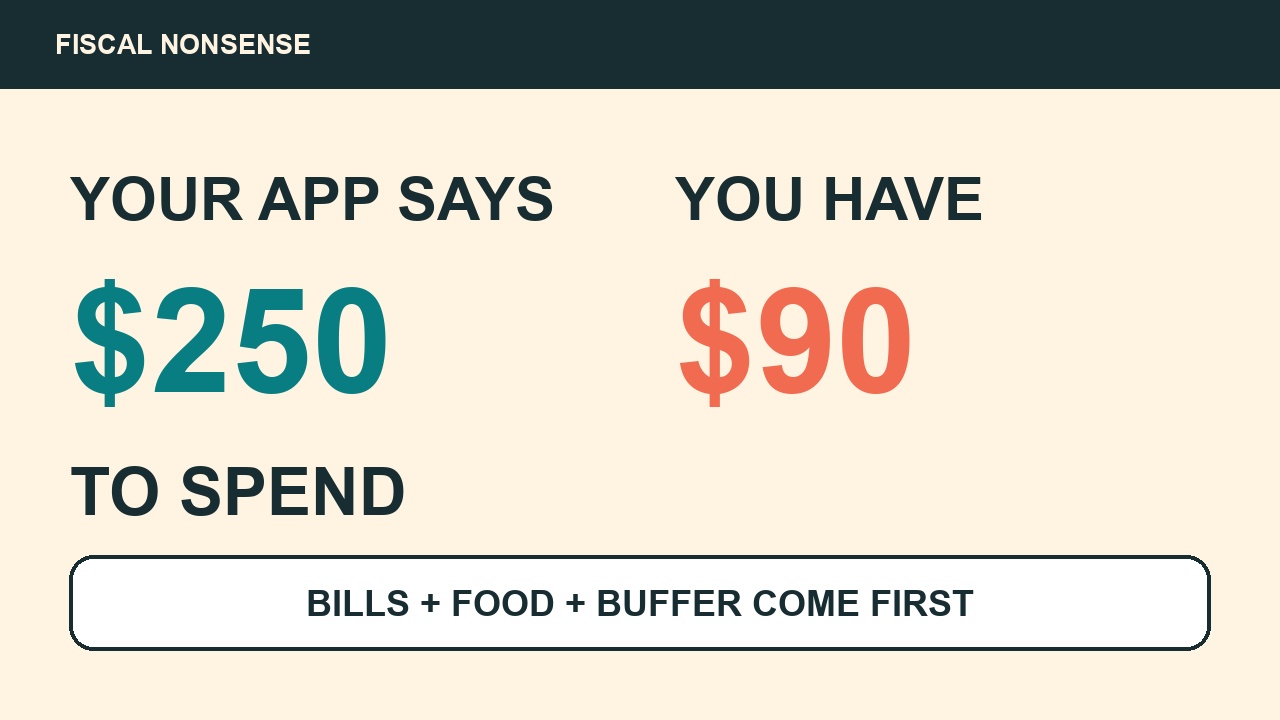
A fictional $250 balance becomes $90 safe to spend after a $90 bill, $40 for food and a chosen $30 buffer. A $210 ticket leaves a planned $120 gap.
Video in English
Loading this player sends connection and viewing data to Google/YouTube, which may use cookies or similar technologies. The rest of this page works without it.
Privacy detailsYour app can show $250 while your plan has only $90 free to spend. In this fictional example, a $90 bill, $40 for food, and a chosen $30 buffer come before a $210 ticket. The balance is real; it is not a spending limit.
YOUR DECISION When you check a balance, which missing piece catches you most often: a bill, a payment still pending, or a buffer? Share the category, not your numbers.
THE FICTIONAL PLAN Current account balance: $250 Bill already assigned: −$90 Food before payday: −$40 Chosen buffer: −$30 Safe to spend: $90 Proposed ticket: −$210 Planned gap: −$120
An overdraft is borrowing. Whether a payment is declined, paid, creates a negative balance, or affects a later payment depends on the account, transaction, timing, merchant and local rules. Check your actual account terms. This is general education, not financial, banking or legal advice.
FREE TOOL Use the Bill Calendar to enter known income and payments by date: https://fiscalnonsense.com/calculators/bill-calendar/ It can show a planned lowest balance. It does not connect to a bank, predict clearing order, authorize an overdraft, calculate fees, or decide what you can afford.
WATCH NEXT: Your Budget Has a Surplus. Why Are You Still Short Before Payday? https://www.youtube.com/watch?v=-QFaIxMrN5w
SOURCES (reviewed 27 October 2026) MoneyHelper — Overdrafts explained (UK context): https://www.moneyhelper.org.uk/en/everyday-money/credit/overdrafts-explained CFPB — Overdraft fee question (US context): https://www.consumerfinance.gov/ask-cfpb/what-can-i-do-if-my-bank-charged-me-a-fee-for-overdrawing-my-account-en-1037/ CFPB Circular 2022-06 — authorization and settlement context (US): https://www.consumerfinance.gov/compliance/circulars/consumer-financial-protection-circular-2022-06-unanticipated-overdraft-fee-assessment-practices/ FDIC — Overdraft and account fees (US context): https://www.fdic.gov/consumer-resource-center/2021-12/overdraft-and-account-fees
Original fictional characters with Callum’s established approved narration, Alex’s approved John voice and a native-audio lip-synced Alex scene. Teaching graphics are locally rendered. Final playback is 1.1× with pitch preserved.
00:00 The $250 balance versus $120 safe to spend 00:16 Alex meets the ticket 00:25 What the $250 already owes 00:40 Why a bill due tomorrow is not spare money 00:55 The $210 ticket test 01:11 Do not guess which payment breaks first 01:30 An overdraft is borrowing 01:47 Cushion versus trapdoor 01:52 The four-line safe-to-spend check 02:24 The $90 result 02:44 Free Bill Calendar 03:02 Choose a real action 03:20 Give each dollar one job 03:33 The decision question
A $400 setup can fit the savings while a fictional pet-care plan is still $45 over Maya’s monthly room. Use four cost buckets before making the plan.
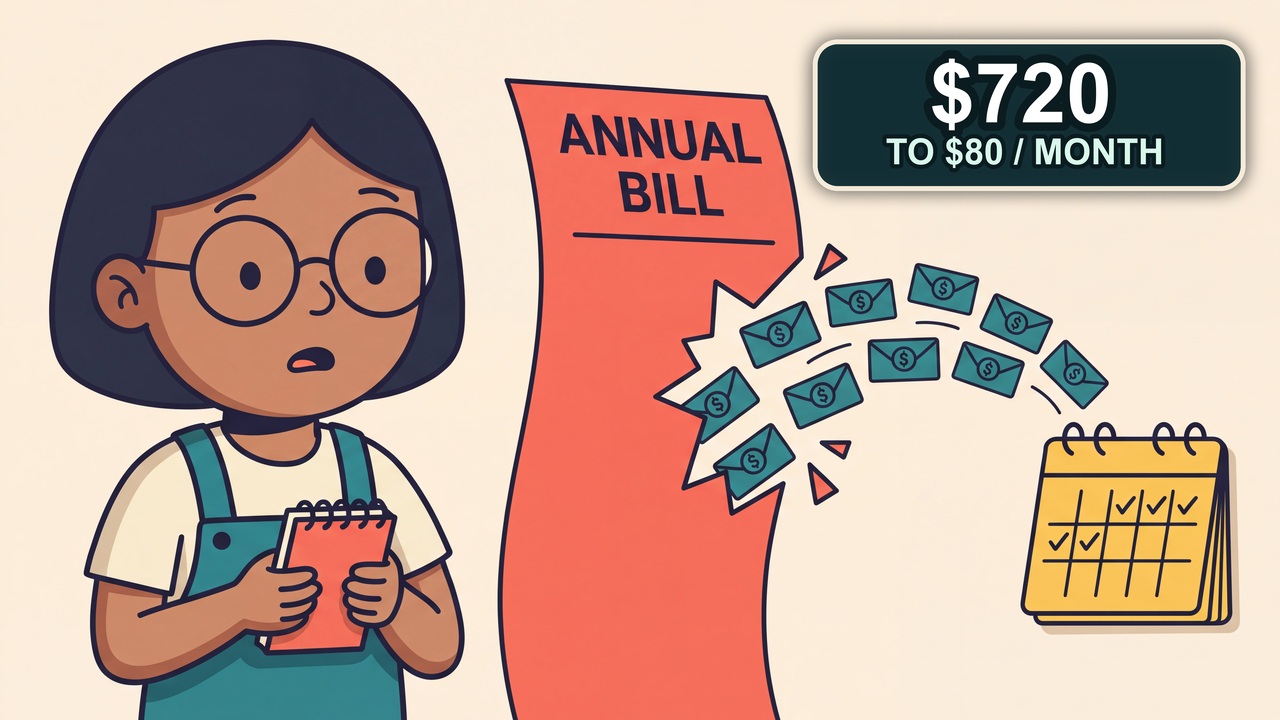
Turn a known annual bill into a monthly set-aside: subtract what is already reserved, divide the rest by the months left, and recalculate when the plan changes.
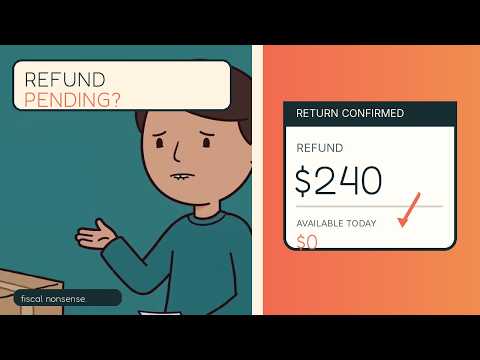
A return can lower a card balance, arrive as cash, or become store credit. Until it has cleared in the account that receives it, it cannot fund another plan.