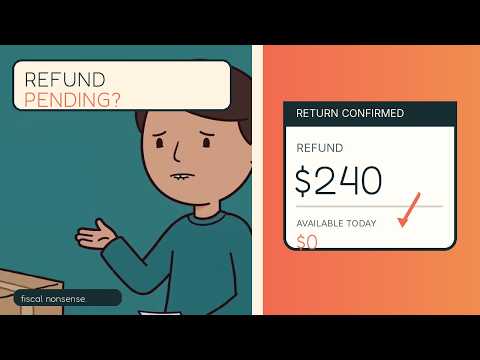
A Refund Is Not a Budget Strategy
A return can lower a card balance, arrive as cash, or become store credit. Until it has cleared in the account that receives it, it cannot fund another plan.
 fiscal
Finance videos / Budgeting & saving
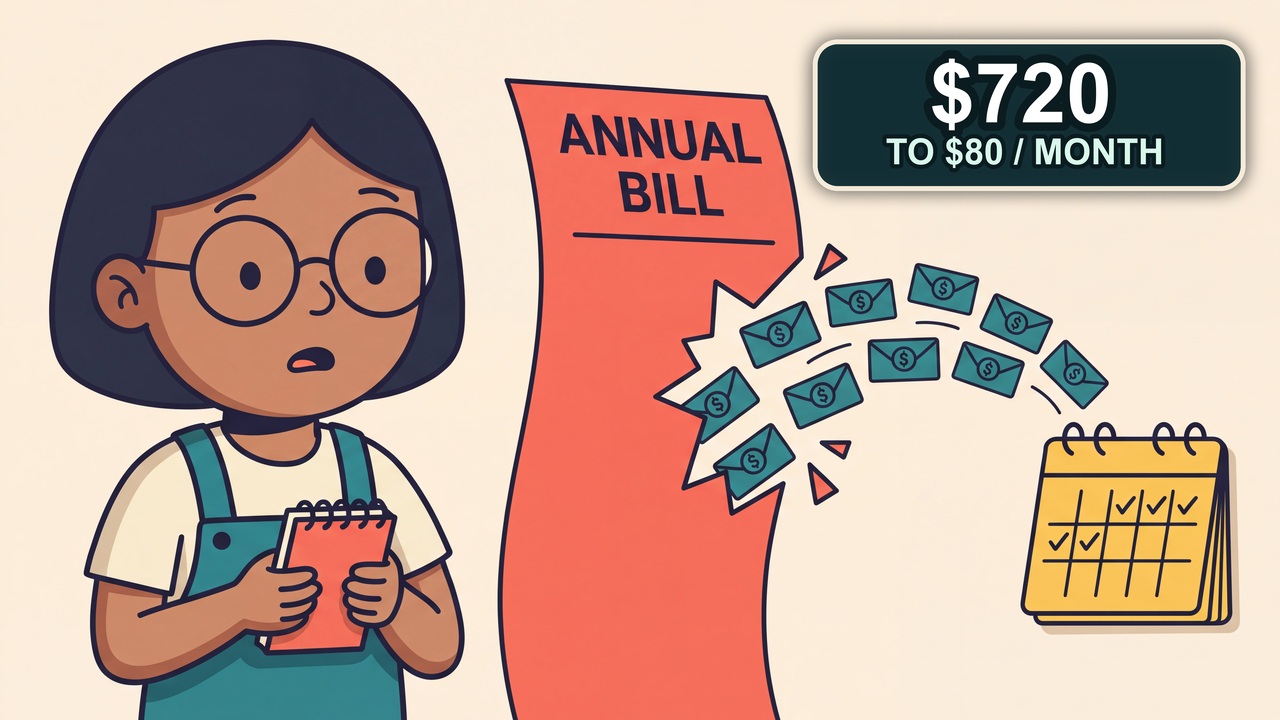
Turn a known annual bill into a monthly set-aside: subtract what is already reserved, divide the rest by the months left, and recalculate when the plan changes.
Video in English
Loading this player sends connection and viewing data to Google/YouTube, which may use cookies or similar technologies. The rest of this page works without it.
Privacy detailsAn annual bill can feel like a surprise only if its monthly cost never got a place in the plan.
In this fictional example, a $720 bill due in nine months becomes an $80 monthly set-aside. If contributions are missed, the number must change: $720 minus $320 already saved leaves $400; across four months, that is $100 a month.
Try the free Annual Expense Planner: https://fiscalnonsense.com/calculators/annual-expense/
It calculates the monthly amount required from an expected total cost, amount already saved, months remaining and your planned contribution. It does not know your contract, predict costs, or decide what you can afford.
For ongoing contribution tracking: Savings Goal Tracker — paid Excel workbook, $2.99 USD before applicable taxes: https://fiscalnonsense.com/shop/savings-goal-tracker/
QUESTION: When a known cost rises, do you raise the monthly set-aside, cut the cost, or change the date? Share the rule you use — no amounts needed.
All dollar amounts, dates and characters are fictional examples for general education. Bills, cancellation rights, renewals, payment terms and consumer protections vary by provider and country. This is not personal financial, tax, legal or consumer advice.
#PersonalFinance #Budgeting #SinkingFunds #AnnualBills #FiscalNonsense
A return can lower a card balance, arrive as cash, or become store credit. Until it has cleared in the account that receives it, it cannot fund another plan.

A lower price per kilo can cost more for the food you actually use. Compare a bag with loose produce, find the break-even amount, and count extra trip costs.
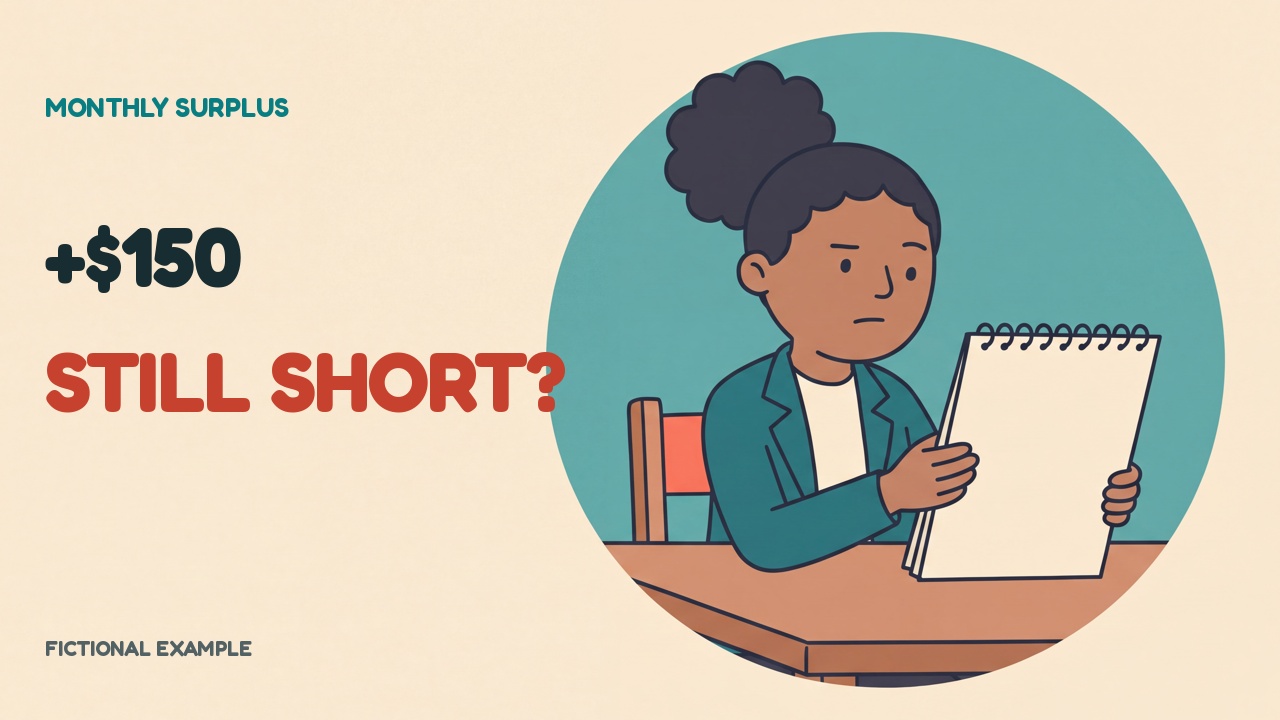
A 150 monthly surplus hides a 250 shortfall before payday. Follow Nina’s dates and compare an agreed date change with an existing cash buffer.