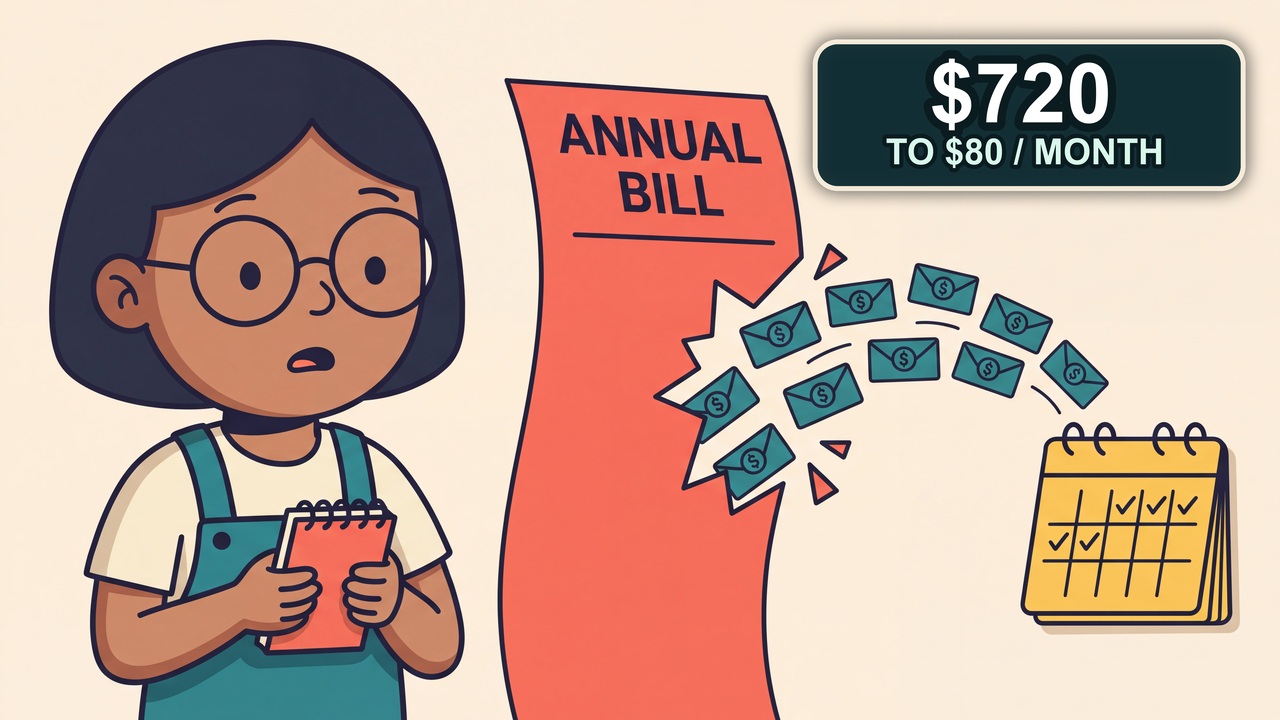
Annual Bills Are a Monthly Problem (Here’s the Fix)
Turn a known annual bill into a monthly set-aside: subtract what is already reserved, divide the rest by the months left, and recalculate when the plan changes.
 fiscal
Finance videos / Budgeting & saving
A lower price per kilo can cost more for the food you actually use. Compare a bag with loose produce, find the break-even amount, and count extra trip costs.
Video in English

Loading this player sends connection and viewing data to Google/YouTube, which may use cookies or similar technologies. The rest of this page works without it.
Privacy detailsFictional example: comparable loose carrots cost $8 per kilogram and a 1 kg bag costs $6. For 500 g of actual use, loose costs $4 versus $6 for the bag. At 750 g the totals tie. At 800 g the bag saves $0.40; an extra trip costing $1 reverses that to $0.60 more. Exact loose weight without a minimum charge is assumed. Use the free Bulk Buying Calculator to compare cash spent and cost per usable kilogram. Follow labels and local food-safety guidance.
Turn a known annual bill into a monthly set-aside: subtract what is already reserved, divide the rest by the months left, and recalculate when the plan changes.
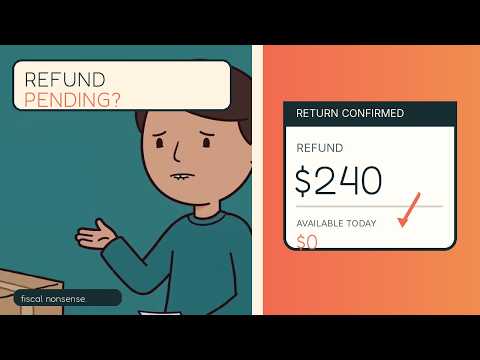
A return can lower a card balance, arrive as cash, or become store credit. Until it has cleared in the account that receives it, it cannot fund another plan.
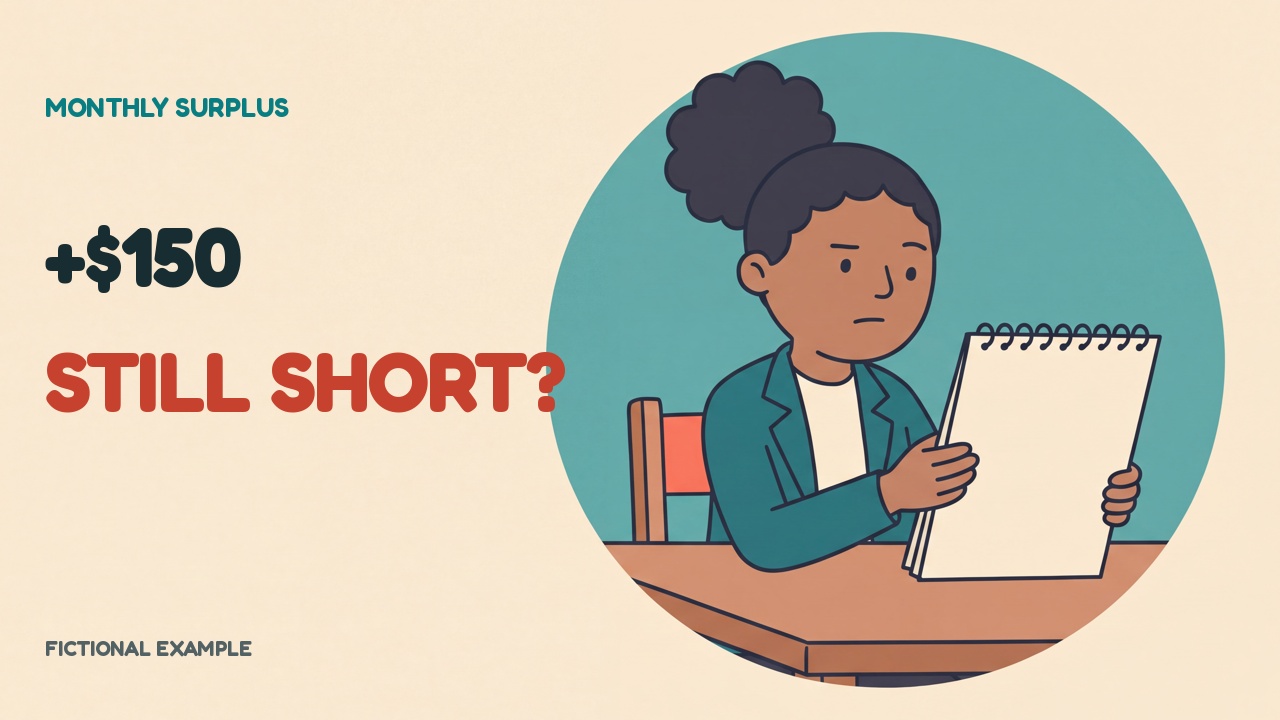
A 150 monthly surplus hides a 250 shortfall before payday. Follow Nina’s dates and compare an agreed date change with an existing cash buffer.