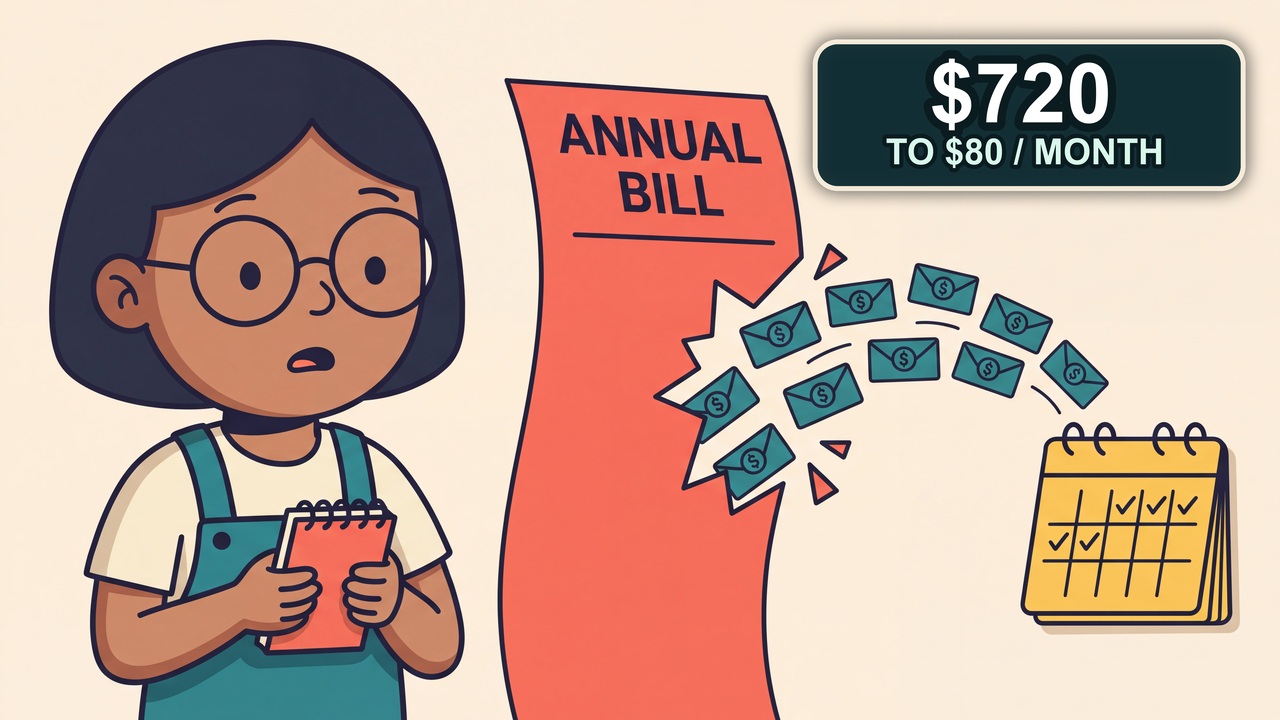
Annual Bills Are a Monthly Problem (Here’s the Fix)
Turn a known annual bill into a monthly set-aside: subtract what is already reserved, divide the rest by the months left, and recalculate when the plan changes.
 fiscal
Finance videos / Budgeting & saving
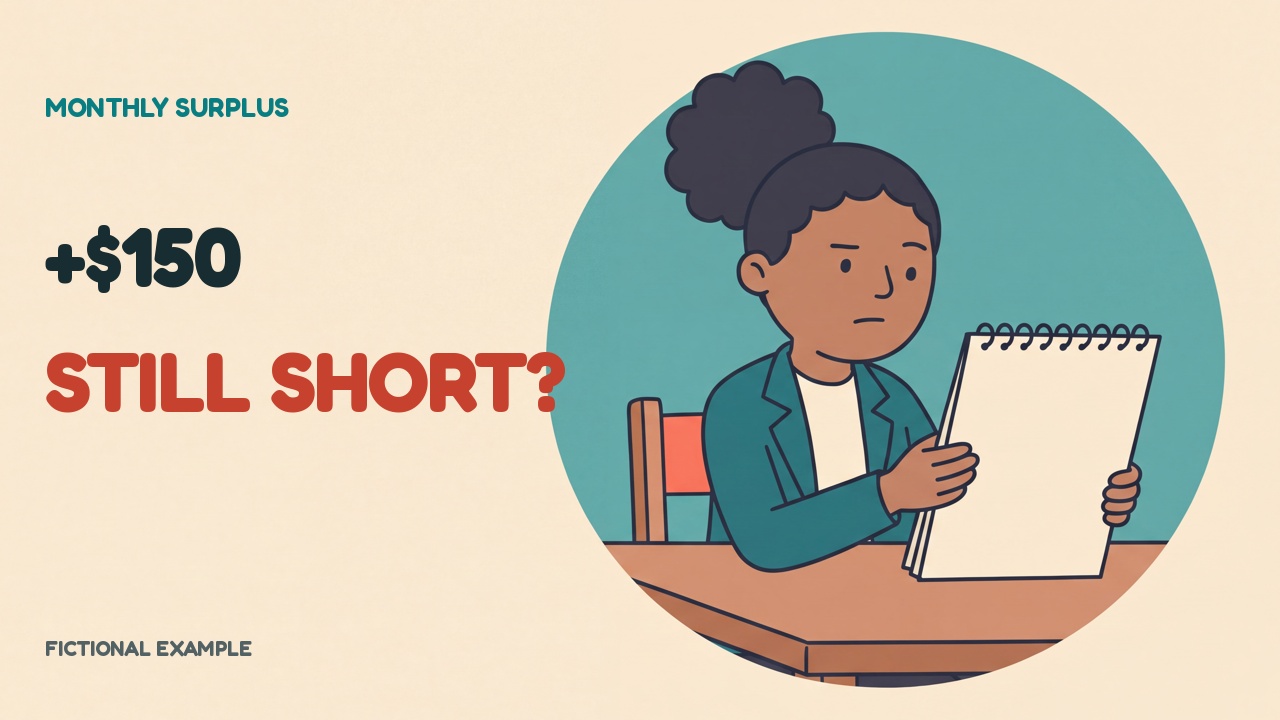
A 150 monthly surplus hides a 250 shortfall before payday. Follow Nina’s dates and compare an agreed date change with an existing cash buffer.
Video in English
Loading this player sends connection and viewing data to Google/YouTube, which may use cookies or similar technologies. The rest of this page works without it.
Privacy detailsTry the FREE Bill calendar running-balance calculator — Download your scenario as a CSV. https://fiscalnonsense.com/calculators/bill-calendar/
Nina earns $3,000 and plans to spend $2,850. Her month has a $150 surplus—yet her planned balance reaches minus $250 before the second payday. Follow each payment date to find the first deficit, then compare an agreed bill-date change with an existing cash buffer.
Which would help Nina first: an agreed due-date change, an existing buffer, or a smaller payment? Explain the constraint you would check without sharing balances or account details.
WATCH NEXT: Five Ways to Budget https://www.youtube.com/watch?v=zpTqF_IhZik
FICTIONAL EXAMPLE Opening cash $100. Income $1,500 on day 1 and day 16. Payments: $1,400 rent on day 2, $250 utility on day 5, $200 groceries on day 8, $500 spending on day 20, $500 bill on day 25. Ending balance $250; minimum planned balance −$250. Moving the utility to day 17 assumes provider agreement and no added cost. A negative plan is a cash shortfall, not permission to borrow. Actual payment clearing, provider terms and local rules differ. General education, not individualized advice.
SOURCES CFPB bill-calendar guidance and consumer research (US sources; no worldwide legal right to move a payment is claimed): https://www.consumerfinance.gov/archive/blog/budget-help-manage-your-monthly-expenses-bill-calendar/ https://www.consumerfinance.gov/data-research/research-reports/consumer-insights-paying-bills/
Original fictional characters, approved voices and AI-assisted character animation; calculations rendered locally. Final speed 1.1x, preserving pitch. #Budgeting #CashFlow #PersonalFinance #FiscalNonsense
CHAPTERS 00:00 A surplus with a cash gap 00:18 The fictional monthly totals 00:58 Find the first deficit 01:27 Choose a realistic repair 02:02 An agreed date change 02:29 Get the change confirmed 02:47 The existing-cash alternative 03:06 Why zero is fragile 03:51 Build your bill calendar
Turn a known annual bill into a monthly set-aside: subtract what is already reserved, divide the rest by the months left, and recalculate when the plan changes.
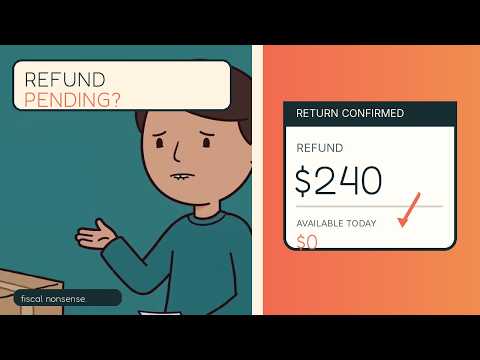
A return can lower a card balance, arrive as cash, or become store credit. Until it has cleared in the account that receives it, it cannot fund another plan.

A lower price per kilo can cost more for the food you actually use. Compare a bag with loose produce, find the break-even amount, and count extra trip costs.