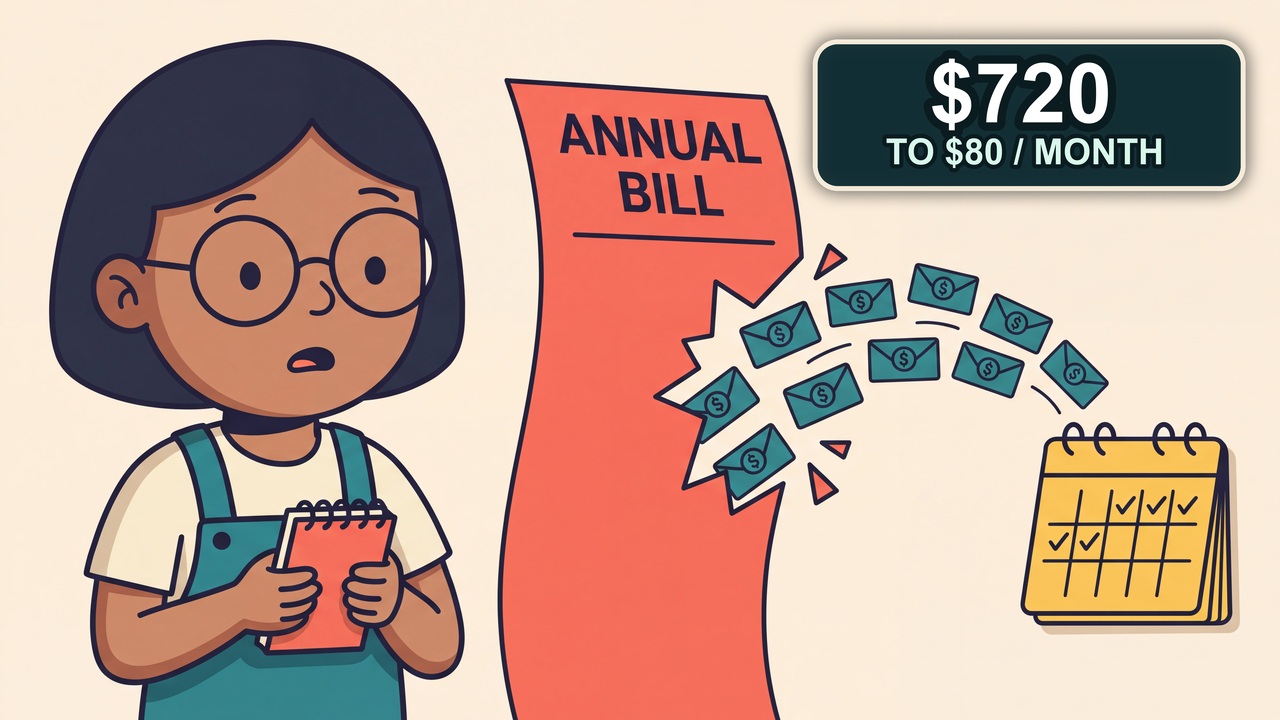
Les factures annuelles sont un problème mensuel (voici la solution)
Transformez une facture annuelle connue en versement mensuel : retirez l’épargne déjà mise de côté, divisez le reste par les mois restants et recalculez si le plan change.
 fiscal
Vidéos sur les finances / Budget et épargne
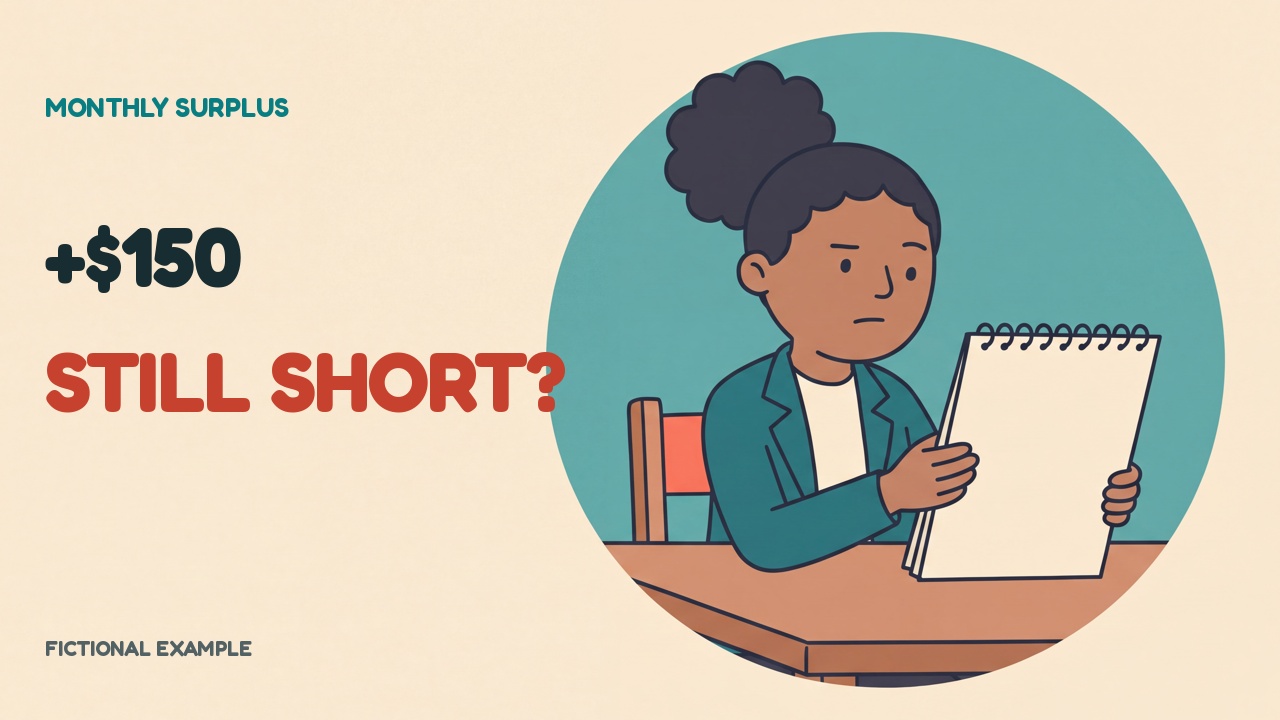
Un excédent mensuel de 150 masque un manque de 250 avant la paie. Suivez les dates de Nina et comparez un report accepté avec une réserve existante.
Vidéo en anglais
Charger ce lecteur envoie des données de connexion et de visionnage à Google/YouTube, qui peut utiliser des cookies ou technologies similaires. Le reste de la page fonctionne sans lui.
Détails sur la confidentialitéTry the FREE Bill calendar running-balance calculator — Download your scenario as a CSV. https://fiscalnonsense.com/calculators/bill-calendar/
Nina earns $3,000 and plans to spend $2,850. Her month has a $150 surplus—yet her planned balance reaches minus $250 before the second payday. Follow each payment date to find the first deficit, then compare an agreed bill-date change with an existing cash buffer.
Which would help Nina first: an agreed due-date change, an existing buffer, or a smaller payment? Explain the constraint you would check without sharing balances or account details.
WATCH NEXT: Five Ways to Budget https://www.youtube.com/watch?v=zpTqF_IhZik
FICTIONAL EXAMPLE Opening cash $100. Income $1,500 on day 1 and day 16. Payments: $1,400 rent on day 2, $250 utility on day 5, $200 groceries on day 8, $500 spending on day 20, $500 bill on day 25. Ending balance $250; minimum planned balance −$250. Moving the utility to day 17 assumes provider agreement and no added cost. A negative plan is a cash shortfall, not permission to borrow. Actual payment clearing, provider terms and local rules differ. General education, not individualized advice.
SOURCES CFPB bill-calendar guidance and consumer research (US sources; no worldwide legal right to move a payment is claimed): https://www.consumerfinance.gov/archive/blog/budget-help-manage-your-monthly-expenses-bill-calendar/ https://www.consumerfinance.gov/data-research/research-reports/consumer-insights-paying-bills/
Original fictional characters, approved voices and AI-assisted character animation; calculations rendered locally. Final speed 1.1x, preserving pitch. #Budgeting #CashFlow #PersonalFinance #FiscalNonsense
CHAPTERS 00:00 A surplus with a cash gap 00:18 The fictional monthly totals 00:58 Find the first deficit 01:27 Choose a realistic repair 02:02 An agreed date change 02:29 Get the change confirmed 02:47 The existing-cash alternative 03:06 Why zero is fragile 03:51 Build your bill calendar
Transformez une facture annuelle connue en versement mensuel : retirez l’épargne déjà mise de côté, divisez le reste par les mois restants et recalculez si le plan change.
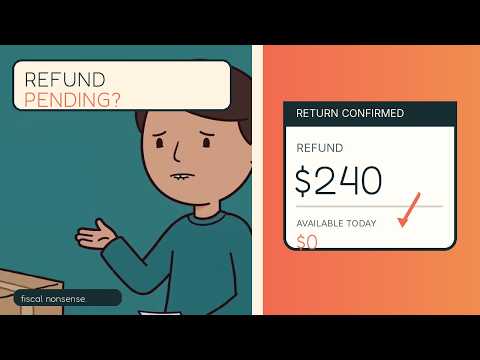
Un retour peut réduire un solde de carte, arriver en espèces ou devenir un avoir. Tant qu’il n’est pas crédité sur le compte qui le reçoit, il ne peut financer aucun autre plan.

Un prix au kilo inférieur peut coûter plus pour la quantité réellement utilisée. Comparez le sachet et le vrac, trouvez le seuil d’égalité et comptez les déplacements supplémentaires.