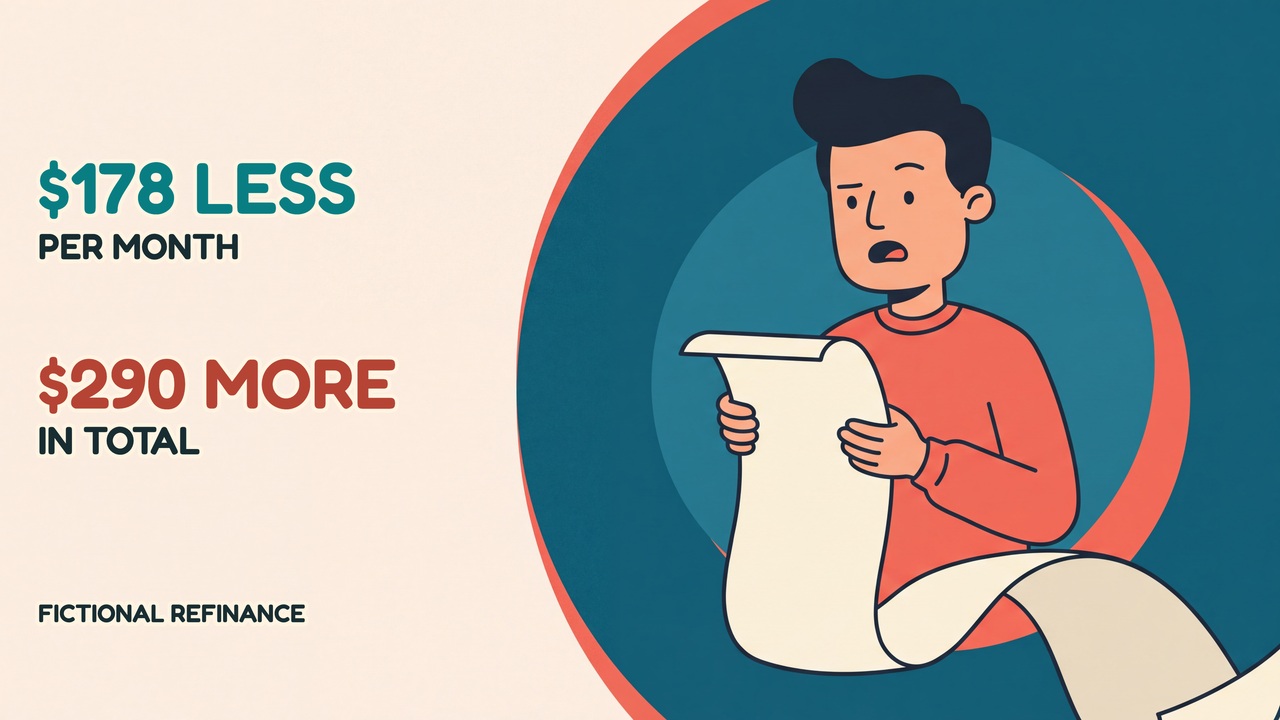
Lower Loan Payment, Higher Total Cost? The Refinance Check
Compare monthly payment, total future cost and the debt-free date before refinancing. A worked example shows why a lower rate and payment can still cost more.
 fiscal
Finance videos / Borrowing & housing
Car leasing explained: compare upfront payments, monthly costs, mileage limits, wear charges and early exit before weighing leasing against buying.
Video in English
Loading this player sends connection and viewing data to Google/YouTube, which may use cookies or similar technologies. The rest of this page works without it.
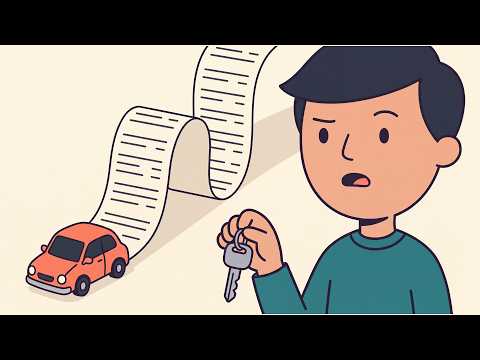
Privacy detailsAlex found a car lease for $300 a month. Unfortunately, the rest of the price was parked somewhere else.
A country-neutral guide to leasing, using a car as the worked example. Alex, Maya, Leo, Nina and Ben explain use versus ownership, upfront costs, distance limits, wear and damage, early exit and how to compare leasing with buying fairly.
THE ILLUSTRATIVE MATH Deal A: $3,600 nonrefundable upfront + 36 monthly payments of $300 = $14,400. Averaged over 36 months, that is $400 a month BEFORE other costs. This average is a comparison tool, not the contractual payment schedule.
Deal B: $1,200 nonrefundable upfront + 36 monthly payments of $350 = $13,800. With all other terms identical, B is $600 cheaper over the term despite the higher advertised monthly payment.
The upfront amount is separate from ALL 36 monthly payments in both invented examples. Neither example includes a refundable security deposit or a purchase at the end. Other fees, running costs and applicable taxes are excluded and must be added where relevant. Avoid counting any charge twice.
Distance illustration: 2,000 extra kilometres at $0.15 per kilometre = $300. Use your actual contract's units, allowance and charges.
Dollar amounts are invented teaching examples, not market quotes or a recommendation. Laws, taxes, product names, ownership arrangements, purchase options and return obligations differ by country and contract. This video uses general concepts, not one country's specific lease rules. Equipment and other leases may work differently.
CHAPTERS 00:00 The attractive monthly payment 00:24 Use is not ownership 01:11 Unpark the full price 02:03 Running costs and distance limits 02:50 The exit matters 03:21 Leasing versus buying fairly 04:14 Four checks before signing
FOUR CHECKS BEFORE SIGNING 1. Total cost, including upfront amounts and what is already included. 2. Usage limits, servicing responsibilities and written wear standards. 3. Early-exit charges and possible value-shortfall liability. 4. Return conditions and any purchase option at the end.
COMPARE FAIRLY Use the same vehicle, time period and driving distance. For buying, a simple net-cost comparison counts cash paid, running costs and remaining loan debt, less the realistic value of the car retained or sold. Do not also add depreciation when already subtracting resale value. For a lease returned, count all lease, running and return costs; there is no car left to sell. A buyout needs its own purchase-cost and asset-value comparison. Detailed comparisons may also include cash-flow timing, opportunity costs and local tax effects.
More Fiscal Nonsense: https://fiscalnonsense.com
SOURCES FOR GENERAL CONCEPTS CFPB — Leasing versus buying a car: https://www.consumerfinance.gov/ask-cfpb/what-should-i-know-about-leasing-versus-buying-a-car-en-815/ MoneyHelper — Leasing a car: https://www.moneyhelper.org.uk/en/everyday-money/buying-and-running-a-car/leasing-a-car-with-personal-contract-hire-pch FTC — Financing or Leasing a Car: https://consumer.ftc.gov/articles/financing-or-leasing-car
These sources describe their own markets. Their local mileage norms, tax treatment and cancellation rights are not presented as worldwide rules.
Original fictional characters. AI-generated voices and character animation, locally animated teaching graphics and original sound effects. General education, not personalized financial advice.
#Leasing #CarLeasing #PersonalFinance #FiscalNonsense
Compare monthly payment, total future cost and the debt-free date before refinancing. A worked example shows why a lower rate and payment can still cost more.
Rent vs buying a home: compare mortgage interest, rent, maintenance, transaction costs and flexibility with a worked example.

Mortgages explained for beginners: principal, interest, equity, repayment periods and the housing costs beyond your monthly loan payment.