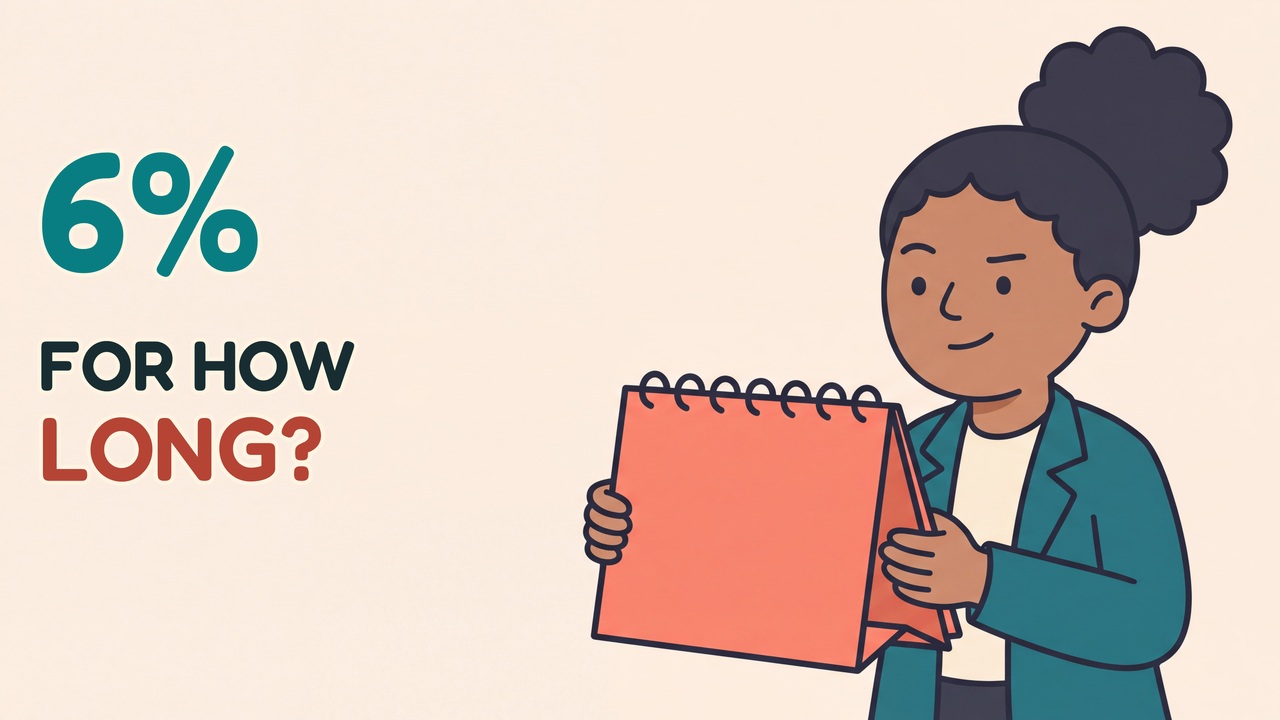
6% Savings… But Only for Three Months
A headline savings rate can hide an expiry date. Compare bonus rates over the same holding period, and see why needing the money sooner can reverse the result.
 fiscal
Finance videos / Saving & investing
Learn to read an ETF factsheet, calculate fees and investigate concentration, duplicated holdings and currency effects. Includes a completely free workbook and three browser calculators.
Video in English

Loading this player sends connection and viewing data to Google/YouTube, which may use cookies or similar technologies. The rest of this page works without it.
Privacy detailsRead an ETF factsheet without buying its marketing. Follow Alex through fees, concentration, duplicated holdings and currency effects, then practise on a second fictional example.
FREE ETF Research Workshop workbook + three free browser calculators: https://fiscalnonsense.com/workshops/etf-research/ No email gate or checkout. English Excel file, six sheets, editable formulas. Page and calculators in English, German, French and Italian.
YOUR TURN: Which label would you investigate first—“world”, “low cost” or “local currency”—and what question would you ask? Share your reasoning, not private balances or account details.
WORKED EXAMPLES • $10,000 × 0.20% = approximately $20 for a year at a constant balance. This is not a predicted invoice or an all-in cost. • Five fictional holdings: 12% + 8% + 6% + 5% + 4% = 35%. • 50% × 12% + 50% × 20% = 16% exposure to one company across two funds. This is not a full overlap metric. • 100 × 1.10 × 0.90 = 99: +10% asset return and −10% currency change combine to −1%, before fees and taxes.
General financial education, not personalized investment or tax advice. All funds, company names and example figures are fictional. The workbook does not rank funds, import live data, recommend a purchase or assess suitability. Product availability, taxes, disclosure requirements and account rules differ by country. Investment losses are possible.
SOURCES Investor.gov — ETF fees and expenses https://www.investor.gov/introduction-investing/general-resources/news-alerts/alerts-bulletins/investor-bulletins/mutual-fund-and-etf-fees-and-expenses-investor-bulletin Investor.gov — Asset allocation and diversification https://www.investor.gov/introduction-investing/getting-started/asset-allocation FINRA — Exchange-traded funds and products https://www.finra.org/investors/investing/investment-products/exchange-traded-funds-and-products Vanguard — Currency hedging https://www.vanguard.com.au/personal/learn/etfs/what-are-hedged-etfs Sources reviewed: 22 September 2026.
Original fictional characters; AI-assisted animation and approved voices. Educational graphics and calculations animated locally. Final playback 1.1× with pitch preserved.
CHAPTERS 00:00 Open the basket 02:04 Read the exact share class and documents 04:09 Turn fund fees into amounts 06:56 Concentration and duplicated holdings 09:36 Asset returns and currency effects 11:43 Income, trading and local questions 13:58 Your factsheet research challenge
#ETF #InvestingForBeginners #FiscalNonsense
A headline savings rate can hide an expiry date. Compare bonus rates over the same holding period, and see why needing the money sooner can reverse the result.
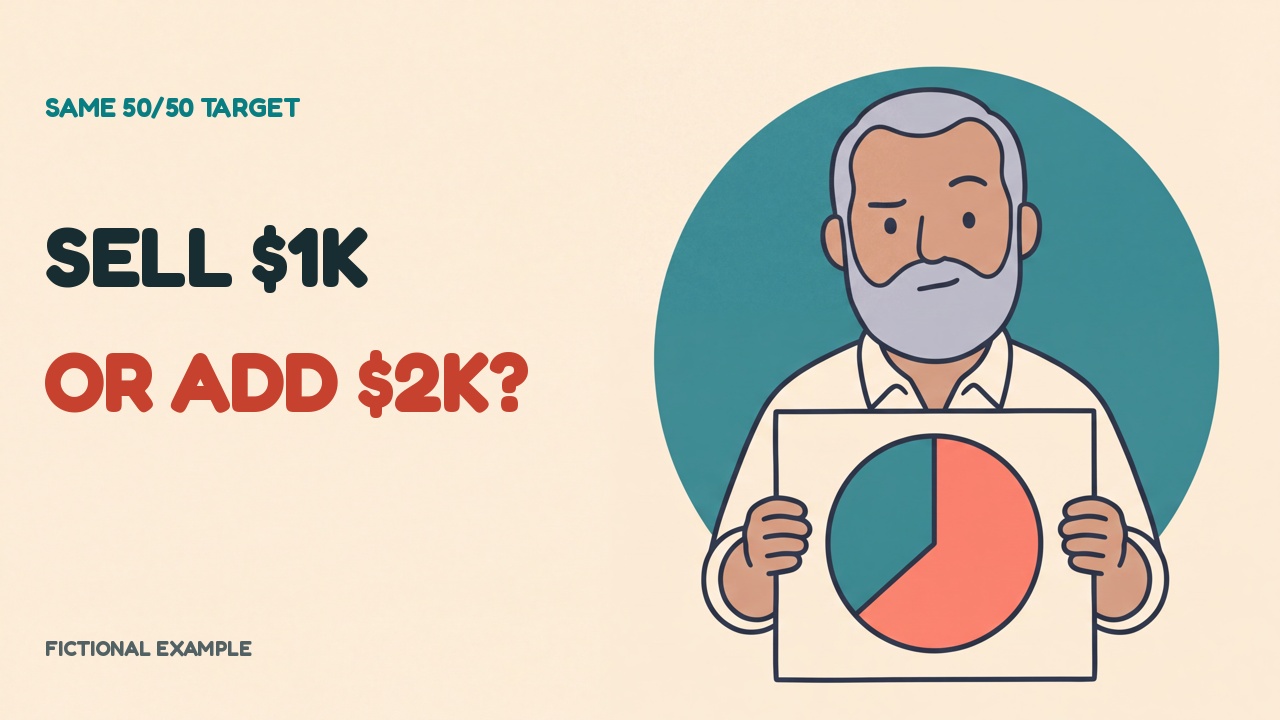
The same fictional 50/50 target needs either a 1,000 transfer or 2,000 of new money. See why the totals differ and what a smaller contribution achieves.
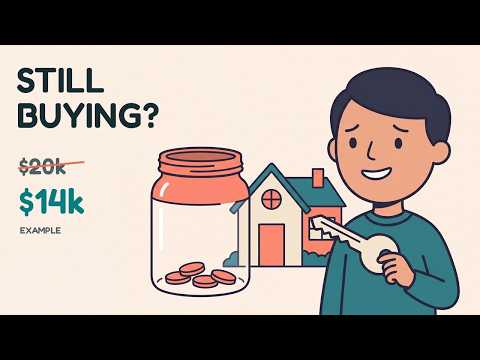
A fictional $6,000 deposit shortfall creates three choices: save more, wait longer or lower the target. Test how a deadline changes the risk you can afford.