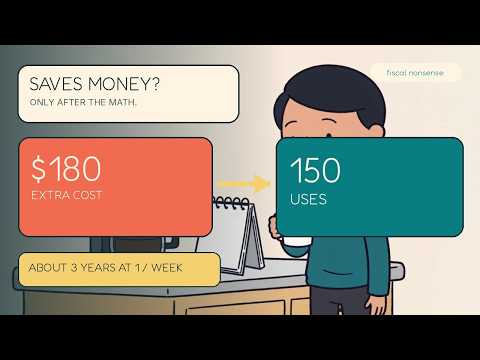
This “Money-Saving” Purchase Takes 3 Years to Save Money
A lower price only saves money when the real saving per use repays the extra upfront cost. See a fictional purchase take nearly three years to break even.
 fiscal
Finance videos / Spending & shopping
Free shipping and sale discounts can make spending feel like saving. Learn to compare the final bill, bulk deals and stacked discounts.
Video in English
Loading this player sends connection and viewing data to Google/YouTube, which may use cookies or similar technologies. The rest of this page works without it.
Privacy detailsAlex added $25 of unwanted extras to avoid $6 in delivery fees. The delivery was free. The detour wasn't.
Join Alex, Maya, Leo, Nina and Ben for a funny, practical guide to spotting when a deal increases your spending. Learn the difference between spending less than planned and earning money, why bulk discounts can still increase your bill, and how sequential percentage discounts actually work.
THE FICTIONAL EXAMPLES • Free delivery: a $45 basket + $6 delivery = $51. Adding $25 of unwanted extras to reach a $70 threshold makes the total $70—$19 more. • Planned jacket: $100 reduced to $70 means $30 less than planned, but $70 still spent. Against a no-purchase plan, it's $70 of additional spending. • Buy two, get one free: three identical $6 bottles cost $12, or $4 each. That's a lower unit price, but twice the $6 bill for buying only one. • Sequential discounts: 20% off $100 leaves $80; another 10% removes $8. Final price $72, a total 28% reduction.
All examples are invented and exclude taxes and any fees not stated. Real purchases should be compared using the full checkout total, applicable taxes, delivery, coupon conditions and return costs. Useful extras that replace planned purchases need a fair comparison over the same period. Waiting is a decision tool, not a guarantee of a better price.
CHAPTERS 00:00 Free delivery, expensive passenger 00:23 Saved compared with what? 01:01 The free-delivery detour 01:53 Bulk bargains, bigger bills 02:26 When discounts multiply 02:56 Give the deal a timeout 03:37 The checkout checklist
BEFORE CHECKOUT Compare the total with your original plan. Check unit prices and offer conditions. Decide whether you need and can afford the purchase. Keep real savings available for your priorities instead of spending the discount again.
More Fiscal Nonsense: https://fiscalnonsense.com
RESOURCES FTC — Online Shopping: https://consumer.ftc.gov/articles/online-shopping Consumer.gov — Making a Budget: https://consumer.gov/your-money/making-budget
Original fictional characters and offers. AI-generated voices and character animation, with locally animated teaching graphics and original sound effects. General financial education. No product or retailer endorsement.
#SmartShopping #Budgeting #PersonalFinance #FiscalNonsense
A lower price only saves money when the real saving per use repays the extra upfront cost. See a fictional purchase take nearly three years to break even.
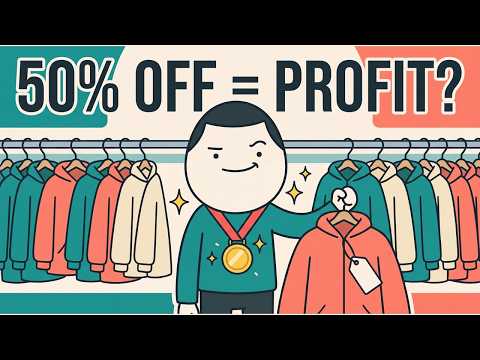
Why do discounts make spending feel like saving? This cartoon explains price anchoring and a three-question check before your next sale purchase.
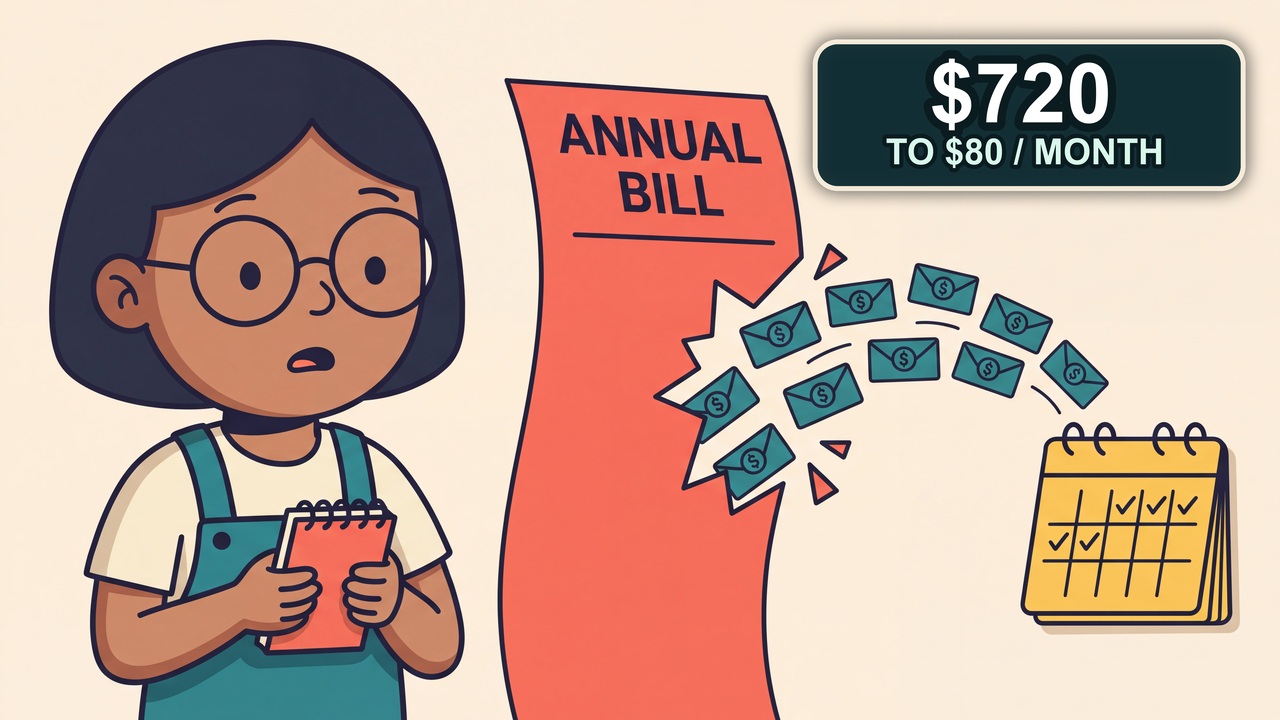
Turn a known annual bill into a monthly set-aside: subtract what is already reserved, divide the rest by the months left, and recalculate when the plan changes.