
6 % sur votre épargne… mais seulement pendant trois mois
Un taux affiché peut cacher une date d’expiration. Comparez les taux bonifiés sur une même durée et découvrez pourquoi un besoin d’argent plus tôt peut inverser le résultat.
 fiscal
Vidéos sur les finances / Épargne et investissement
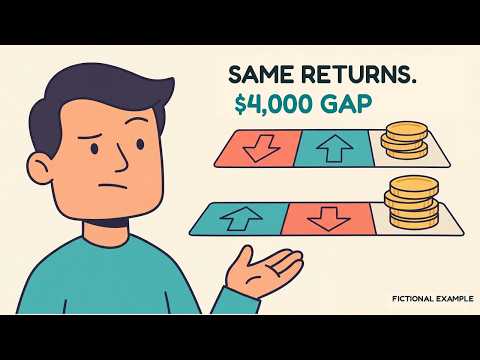
Inversez deux rendements annuels avec les mêmes retraits : un exemple de retraite termine avec 4 000 de moins.
Vidéo en anglais
Charger ce lecteur envoie des données de connexion et de visionnage à Google/YouTube, qui peut utiliser des cookies ou technologies similaires. Le reste de la page fonctionne sans lui.
Détails sur la confidentialitéTry the FREE Return-order calculator and download your scenario as a CSV: https://fiscalnonsense.com/calculators/return-order/
Same starting balance, same pair of returns and same withdrawals: why does one fictional retirement pot finish at $74,000 while the other reaches $78,000? See how the order of returns interacts with spending.
Our two-year example starts with $100,000. Each path receives one −20% year and one +20% year in opposite orders. A $10,000 withdrawal happens at each year end, after the return. Both withdraw $20,000 in total. Without withdrawals, both paths finish at $96,000. These are hypothetical numbers, not forecasts or a recommended withdrawal rate.
The model excludes taxes, fees, inflation, other income and portfolio changes. Reserves and spending flexibility have trade-offs; no single reserve size or spending rule guarantees success. Local rules and personal circumstances matter.
Which part of a spending plan could you change after a market fall: timing, amount, or neither?
WATCH NEXT: Five Types of FIRE — compare different routes to financial independence. https://youtu.be/9CNzxXKLkT4
CHAPTERS 00:00 Same returns, different result 00:39 Loss first versus gain first 01:33 Why withdrawals change the result 02:09 The no-withdrawal control 02:48 Test your spending plan
SOURCES https://www.schwab.com/learn/story/timing-matters-understanding-sequence-returns-risk https://www.investor.gov/additional-resources/general-resources/publications-research/info-sheets/beginners-guide-asset
General financial education, not individualized investment, tax or legal advice. AI-generated character animation and voices; original script and locally animated calculations. https://fiscalnonsense.com #RetirementPlanning #PersonalFinance #FiscalNonsense
Un taux affiché peut cacher une date d’expiration. Comparez les taux bonifiés sur une même durée et découvrez pourquoi un besoin d’argent plus tôt peut inverser le résultat.
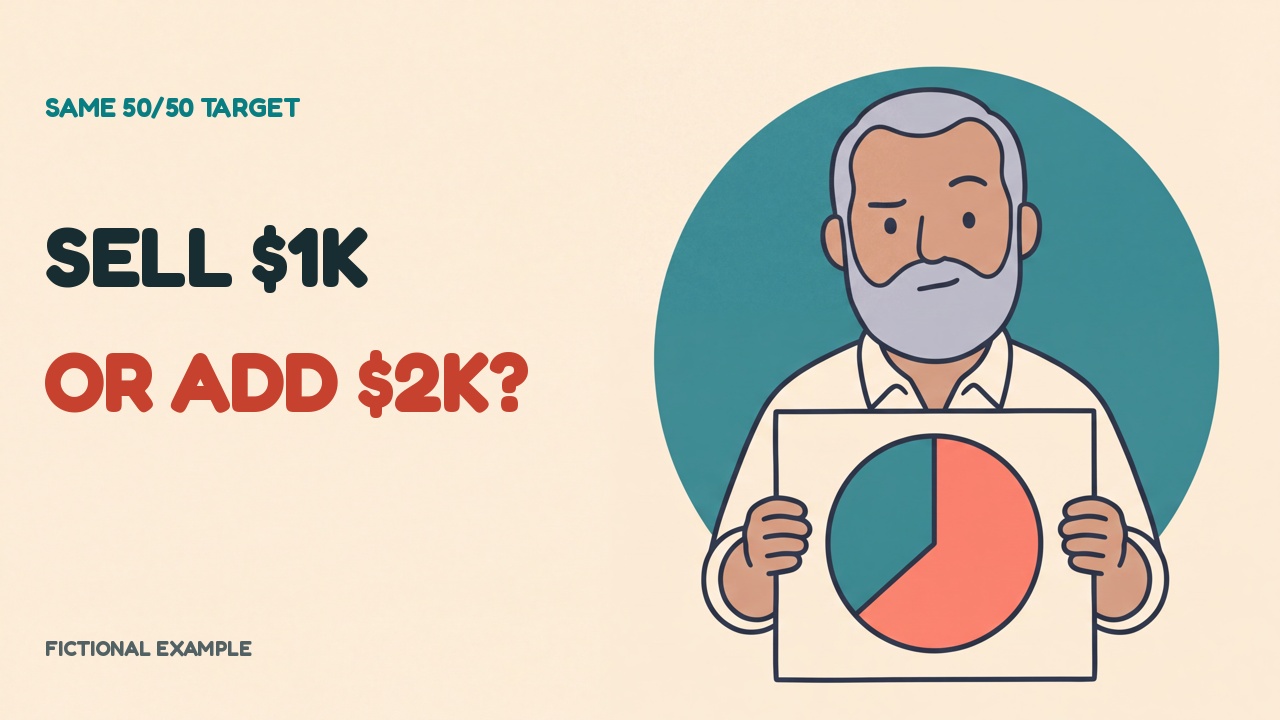
La même cible fictive 50/50 demande un transfert de 1 000 ou 2 000 d’argent nouveau. Comprenez les totaux et l’effet d’un versement plus petit.
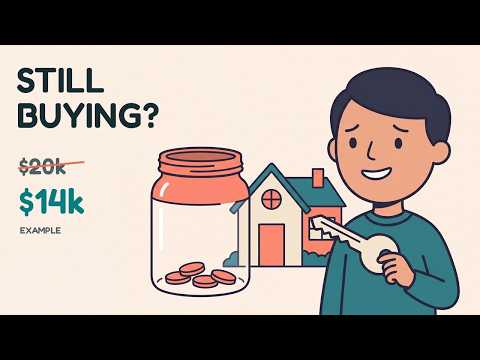
Un manque fictif de 6 000 dollars pour un apport immobilier impose trois choix : épargner plus, attendre davantage ou réduire l’objectif. Voyez comment l’échéance change le risque que vous pouvez supporter.