
6 % sur votre épargne… mais seulement pendant trois mois
Un taux affiché peut cacher une date d’expiration. Comparez les taux bonifiés sur une même durée et découvrez pourquoi un besoin d’argent plus tôt peut inverser le résultat.
 fiscal
Vidéos sur les finances / Épargne et investissement
Un manque fictif de 6 000 dollars pour un apport immobilier impose trois choix : épargner plus, attendre davantage ou réduire l’objectif. Voyez comment l’échéance change le risque que vous pouvez supporter.
Vidéo en anglais
Charger ce lecteur envoie des données de connexion et de visionnage à Google/YouTube, qui peut utiliser des cookies ou technologies similaires. Le reste de la page fonctionne sans lui.
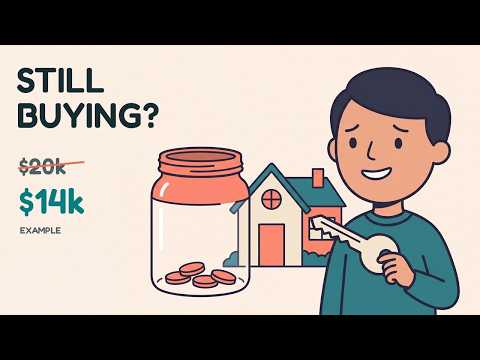
Détails sur la confidentialitéA hypothetical 30% fall turns a $20,000 house deposit into $14,000. Could Alex still buy in two years? Choose between saving more, changing the date and reducing the target—and see why the timing of a loss changes the answer.
Try the FREE Savings Goal Calculator (including the shortfall scenario): https://fiscalnonsense.com/calculators/savings-goal/#shortfall
For ongoing tracking: Savings Goal Tracker — paid Excel workbook, $2.99 USD before applicable taxes: https://fiscalnonsense.com/shop/savings-goal-tracker/
Which would you change first for Alex: monthly saving, deadline or target? Tell us why without sharing private financial details.
WATCH NEXT: Rent vs Buy a Home — Compare the Real Costs https://www.youtube.com/watch?v=cijWO7XdMZM
FICTIONAL EXAMPLE $20,000 × (1 − 30%) = $14,000. The remaining $6,000 needs $250/month across 24 months after the loss. At $100/month, the deadline balance is $16,400 with a $3,600 shortfall, or rebuilding takes 60 months. No later market returns, interest, taxes, fees or changing house prices are assumed in the repair calculation. A loss one month before the purchase leaves one month to repair it.
General financial education, not individualized investment advice. Country-neutral invented dollar examples. Product risks, access, deposit protection, lending rules and buying costs vary locally. Neither calculator nor workbook predicts returns, chooses investments or guarantees a purchase outcome. Separate emergency reserves from money assigned to this goal.
SOURCES FINRA — Know Your Risk Tolerance https://www.finra.org/investors/insights/know-your-risk-tolerance Investor.gov — Gauge Your Risk Tolerance https://www.investor.gov/introduction-investing/investing-basics/save-and-invest/gauge-your-risk-tolerance
Original fictional characters. AI-assisted character animation and approved voices; locally animated educational graphics. #PersonalFinance #SavingForAHouse #FiscalNonsense
CHAPTERS 00:00 The deposit has a deadline 00:29 Willingness versus ability 01:05 Choose a repair 02:06 Change the date—or the target 03:08 Can your backup do two jobs? 03:48 Your tools and five-question goal card
Un taux affiché peut cacher une date d’expiration. Comparez les taux bonifiés sur une même durée et découvrez pourquoi un besoin d’argent plus tôt peut inverser le résultat.
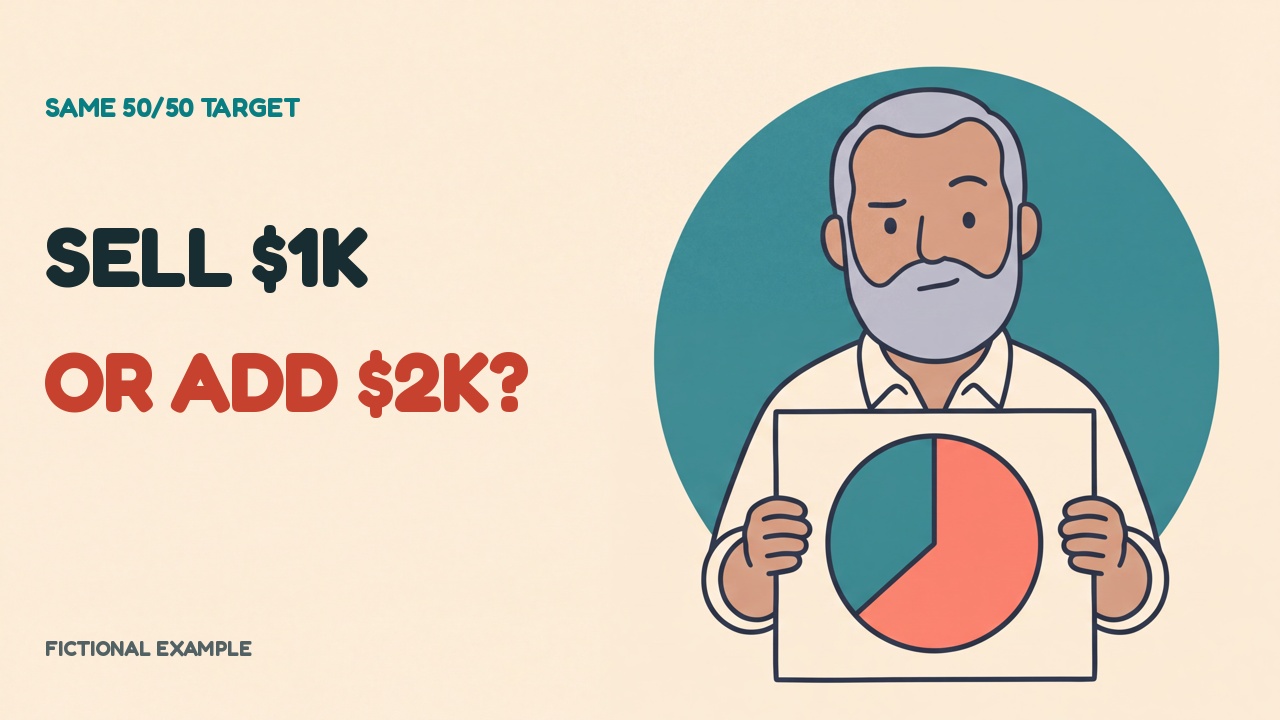
La même cible fictive 50/50 demande un transfert de 1 000 ou 2 000 d’argent nouveau. Comprenez les totaux et l’effet d’un versement plus petit.
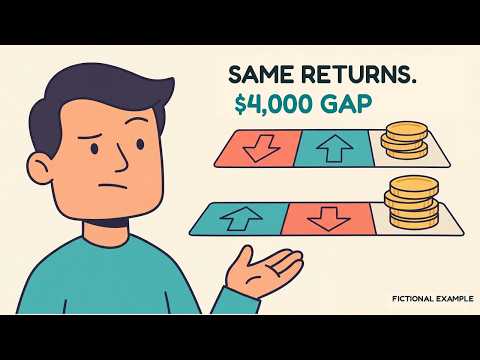
Inversez deux rendements annuels avec les mêmes retraits : un exemple de retraite termine avec 4 000 de moins.