
The Higher Salary Can Pay Less Per Hour
Compare job offers using take-home pay, extra work costs and extra time, so a bigger salary does not hide the trade you are making.
 fiscal
Video di finanza / Lavoro e reddito
Un esempio fittizio mostra come costi diretti, ore non pagate e data di pagamento possano rendere un incarico da 500 $ meno conveniente di uno da 350 $.
Video in inglese

Caricare il lettore invia dati di connessione e visione a Google/YouTube, che può usare cookie o tecnologie simili. Il resto della pagina funziona anche senza.
Dettagli sulla privacyA $500 side job can leave less cash than a $350 one. In our fictional example, Job A leaves $330 after the direct costs we list; Job B leaves $335. Then the hours reverse the question again.
YOUR DECISION What would you check first on a side job: direct costs, unpaid hours, or when the client pays? Explain your reasoning without sharing a client or income.
THE FICTIONAL EXAMPLE Job A: $500 invoice − $90 materials − $50 platform fee − $30 travel caused by this job = $330 before any local taxes or contributions. Seven total hours gives about $47 per hour before those reserves. Job B: $350 invoice − $15 payment fee = $335 before any local taxes or contributions. Three and a half total hours gives about $96 per hour before those reserves.
This is a comparison method, not tax, legal, pricing, benefit or business advice. Tax, contributions, registration, deductible-cost rules, payment terms and timing vary by country and work arrangement. Do not use a universal tax percentage from a video. Keep records and verify applicable obligations locally.
WATCH NEXT: The Higher Salary Can Pay Less Per Hour https://www.youtube.com/watch?v=xB_hzB_lweE Why the annual headline is only the start of a job comparison.
SOURCES (reviewed 27 October 2026) IRS recordkeeping guidance — US tax context only; used here to support keeping records of receipts and expenses, not to state rules outside the US: https://www.irs.gov/businesses/small-businesses-self-employed/what-kind-of-records-should-i-keep US Small Business Administration break-even calculator — distinguishes price and costs; this video does not calculate a business break-even result: https://www.sba.gov/counseling/plan-your-business/break-even-point-calculator/
Original fictional characters, Callum and Alex’s established approved voices, one native-audio lip-synced character scene, and locally rendered teaching graphics. Final playback is 1.1× with pitch preserved.
00:00 The $500 invoice and the $350 job 00:18 Alex meets his spreadsheet 00:25 Job A: direct costs first 00:42 Job B leaves more cash 01:01 Revenue is not spending money 01:16 The $500 receipt 01:26 Your choice: which leaves more? 01:44 Count unpaid hours 02:05 Compare time as well as cash 02:25 Alex’s calendar objects 02:30 Local tax and contribution reserves 02:53 Keep records and payment dates 03:14 The five-line job check 03:32 Compare the whole job 03:55 Your side-job question
#SideHustle #Freelance #PersonalFinance #FiscalNonsense
Compare job offers using take-home pay, extra work costs and extra time, so a bigger salary does not hide the trade you are making.
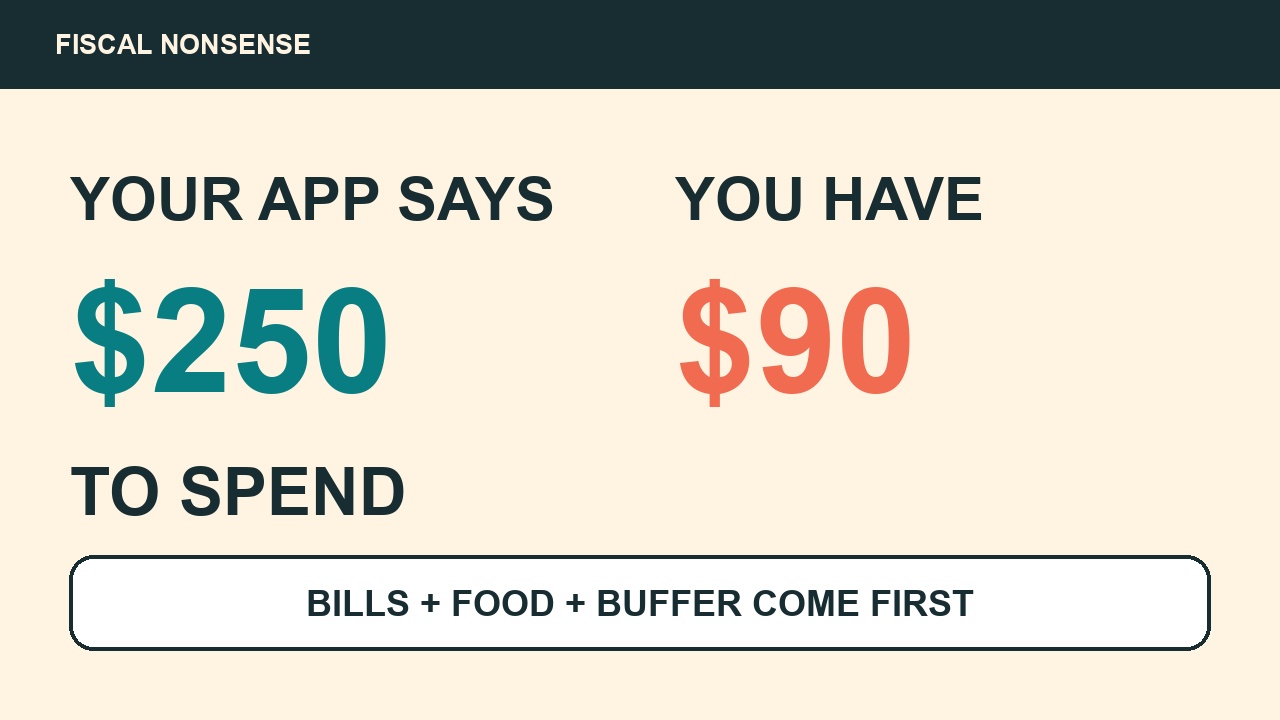
Un saldo fittizio di 250 dollari diventa 90 dollari sicuri da spendere dopo una bolletta, il cibo e un margine. Un biglietto da 210 dollari lascia un divario pianificato di 120 dollari.

Una rata fittizia da 400 dollari diventa un piano mensile di trasporto da 725 dollari con assicurazione, energia, manutenzione e costi annuali.