
The Higher Salary Can Pay Less Per Hour
Compare job offers using take-home pay, extra work costs and extra time, so a bigger salary does not hide the trade you are making.
 fiscal
Finanzvideos / Arbeit und Einkommen
Ein erfundenes Beispiel zeigt, wie direkte Kosten, unbezahlte Stunden und der Zahlungstermin einen 500-Dollar-Auftrag schlechter machen können als einen über 350 Dollar.
Video auf Englisch

Das Laden sendet Verbindungs- und Wiedergabedaten an Google/YouTube. Dabei können Cookies oder ähnliche Technologien eingesetzt werden. Der Rest der Seite funktioniert auch ohne Player.
DatenschutzdetailsA $500 side job can leave less cash than a $350 one. In our fictional example, Job A leaves $330 after the direct costs we list; Job B leaves $335. Then the hours reverse the question again.
YOUR DECISION What would you check first on a side job: direct costs, unpaid hours, or when the client pays? Explain your reasoning without sharing a client or income.
THE FICTIONAL EXAMPLE Job A: $500 invoice − $90 materials − $50 platform fee − $30 travel caused by this job = $330 before any local taxes or contributions. Seven total hours gives about $47 per hour before those reserves. Job B: $350 invoice − $15 payment fee = $335 before any local taxes or contributions. Three and a half total hours gives about $96 per hour before those reserves.
This is a comparison method, not tax, legal, pricing, benefit or business advice. Tax, contributions, registration, deductible-cost rules, payment terms and timing vary by country and work arrangement. Do not use a universal tax percentage from a video. Keep records and verify applicable obligations locally.
WATCH NEXT: The Higher Salary Can Pay Less Per Hour https://www.youtube.com/watch?v=xB_hzB_lweE Why the annual headline is only the start of a job comparison.
SOURCES (reviewed 27 October 2026) IRS recordkeeping guidance — US tax context only; used here to support keeping records of receipts and expenses, not to state rules outside the US: https://www.irs.gov/businesses/small-businesses-self-employed/what-kind-of-records-should-i-keep US Small Business Administration break-even calculator — distinguishes price and costs; this video does not calculate a business break-even result: https://www.sba.gov/counseling/plan-your-business/break-even-point-calculator/
Original fictional characters, Callum and Alex’s established approved voices, one native-audio lip-synced character scene, and locally rendered teaching graphics. Final playback is 1.1× with pitch preserved.
00:00 The $500 invoice and the $350 job 00:18 Alex meets his spreadsheet 00:25 Job A: direct costs first 00:42 Job B leaves more cash 01:01 Revenue is not spending money 01:16 The $500 receipt 01:26 Your choice: which leaves more? 01:44 Count unpaid hours 02:05 Compare time as well as cash 02:25 Alex’s calendar objects 02:30 Local tax and contribution reserves 02:53 Keep records and payment dates 03:14 The five-line job check 03:32 Compare the whole job 03:55 Your side-job question
#SideHustle #Freelance #PersonalFinance #FiscalNonsense
Compare job offers using take-home pay, extra work costs and extra time, so a bigger salary does not hide the trade you are making.
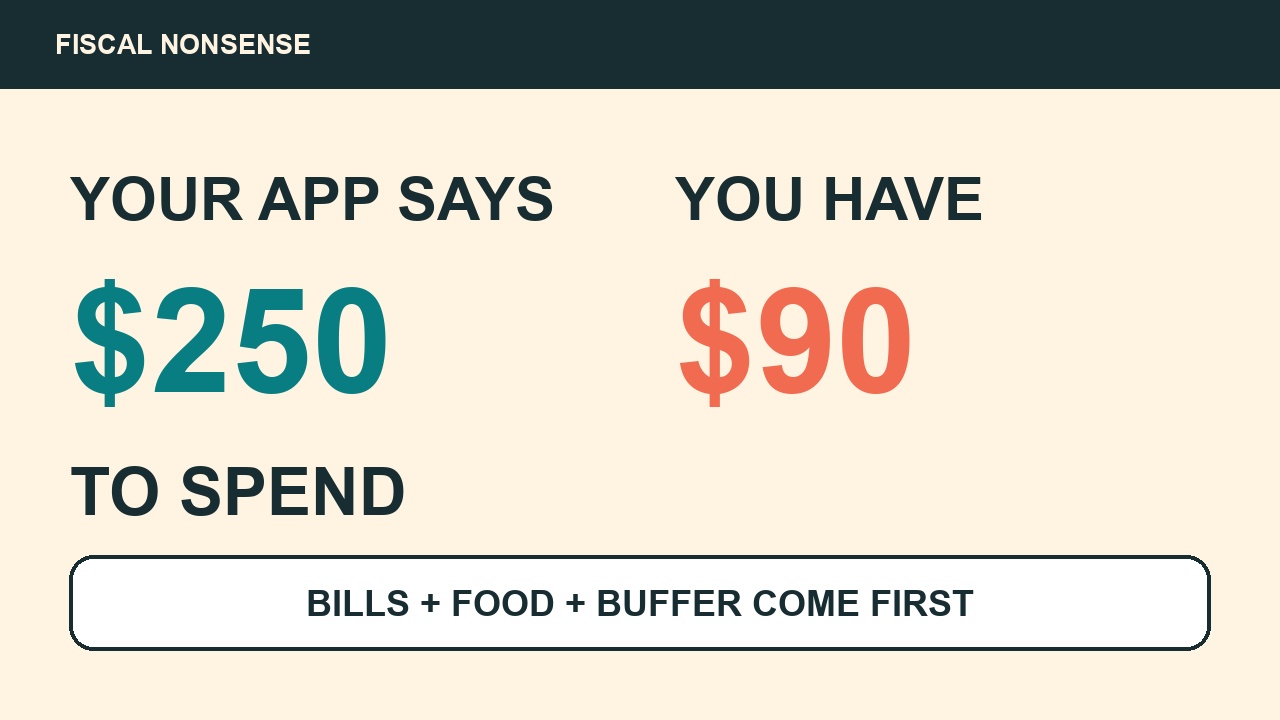
Ein fiktiver Kontostand von 250 Dollar wird nach einer Rechnung, Essen und einem Puffer zu 90 Dollar sicher ausgebbarem Geld. Ein Ticket für 210 Dollar lässt eine geplante Lücke von 120 Dollar.

Eine fiktive Rate von 400 Dollar wird mit Versicherung, Energie, Wartung und jährlichen Kosten zu einem monatlichen Transportplan von 725 Dollar.