Cinque tipi di FIRE: Lean, Fat, Coast, Barista e altri
Esplora cinque percorsi verso l’indipendenza finanziaria. Spese, lavoro e ipotesi sui prelievi cambiano il piano.
 fiscal
Video di finanza / Investimenti e indipendenza
Confronta costi del debito, rischio degli investimenti, risparmi di emergenza e metodi valanga e palla di neve.
Video in inglese

Caricare il lettore invia dati di connessione e visione a Google/YouTube, che può usare cookie o tecnologie simili. Il resto della pagina funziona anche senza.
Dettagli sulla privacyAlex wants his money working for him. Unfortunately, his lender hired it first.
Should you pay off debt or invest? Alex, Maya, Leo, Nina and Ben compare avoided borrowing costs with uncertain investment returns, without pretending one interest-rate cutoff works for everyone. Narrated by Callum.
WHAT YOU WILL LEARN • Cover essentials and required debt payments before allocating spare money. • Keep accessible emergency cash so the next surprise does not create more debt. • Compare the interest an extra repayment actually avoids with investment returns after fees and relevant taxes. • Check repayment charges, promotional-rate endings, variable rates and how overpayments are applied. • Understand avalanche versus snowball repayment methods. • Consider employer contributions, account restrictions and local tax incentives. • Recognize when a deliberate split between repayment and investing may fit.
CHAPTERS 00:00 Your money has a job 00:25 Protect the foundations 01:10 Compare debt costs and investment returns 02:07 Read the repayment terms 02:37 Avalanche or snowball? 03:08 When doing both makes sense 04:03 Give spare money a purpose
THE EXAMPLES, EXPLAINED All dollar amounts and rates are fictional teaching examples. They are not current product quotes, suggested thresholds or market forecasts.
1. Simplified debt comparison: an extra $1,000 would otherwise remain borrowed for one full year at 20% SIMPLE annual interest. Repaying that principal at the start avoids $200: $1,000 × 0.20 × 1 year. Assume no early-repayment penalty, fees or tax effects. This illustrates the marginal principal, not a whole loan's amortization schedule. Required payments must still be made. Actual savings depend on the contract and how the balance changes.
2. Hypothetical investment comparison: $1,000 at an imagined 7% one-year return would earn $70 BEFORE fees and taxes. The return is not promised and losses are possible. A projected gain does not have the same certainty as avoiding a contractual borrowing cost. Avoided interest is a cost saving, not cash investment income.
3. Repayment-method illustration: debt A is $2,000 at 20%, B is $500 at 10%, C is $4,000 at 5%. With urgent obligations handled, required payments continuing, and no special charges or terms, avalanche sends extra money to A; snowball sends it to B. Highest-cost-first generally minimizes interest under comparable terms. Smallest-balance-first can be motivating but may cost more. Local priority obligations and special contract terms can override either ranking.
4. Illustrative split: $300 of genuinely spare monthly money = $200 extra debt repayment + $100 investing. This is NOT a recommended ratio. Essentials and required payments are already covered; manageable borrowing, a cash cushion and a suitable long horizon are assumed.
IMPORTANT CONTEXT There is no universal percentage that settles this decision. Risk, liquidity, income stability, tax treatment, benefits and personal goals matter. Check any employer contribution's eligibility, vesting and access restrictions. Benefits do not erase urgent bills or unaffordable debt. Overpayments may shorten a loan without immediately lowering the required instalment, and repaid money may not be accessible again.
If you invest, diversify suitably, control costs and understand that values can fall. Do not borrow more to chase returns. Restricted retirement savings are not accessible emergency cash. If payments are unaffordable, contact lenders and a reputable local debt adviser.
Country-neutral general education, not personalized financial advice. Laws, taxes, debt priorities and retirement plans vary by jurisdiction.
More Fiscal Nonsense: https://fiscalnonsense.com
SOURCES SEC Investor.gov — High-interest debt: https://www.investor.gov/introduction-investing/investing-basics/save-and-invest/pay-credit-cards-or-other-high-interest MoneyHelper — Early repayment considerations: https://www.moneyhelper.org.uk/en/homes/buying-a-home/should-you-pay-off-your-mortgage-early FINRA — New investor foundations: https://www.finra.org/investors/insights/tips-new-investors CFPB — Debt repayment methods: https://www.consumerfinance.gov/archive/blog/how-reduce-your-debt/
Sources discuss their own jurisdictions; local rules are not presented as worldwide entitlements.
Original fictional characters. AI-generated voices and character animation; local animated teaching graphics and original sound effects.
#DebtOrInvest #DebtPayoff #InvestingBasics #PersonalFinance #FiscalNonsense
Esplora cinque percorsi verso l’indipendenza finanziaria. Spese, lavoro e ipotesi sui prelievi cambiano il piano.

Scopri come funziona la capitalizzazione con esempi su versamenti, reinvestimento, costi e rischio.
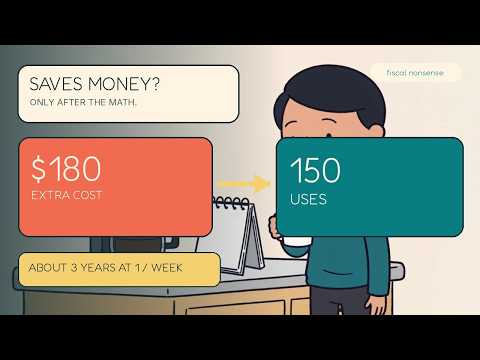
Un prezzo più basso fa risparmiare solo se il risparmio reale per utilizzo ripaga il costo iniziale aggiuntivo. Scopri come un acquisto fittizio richieda quasi tre anni per raggiungere il pareggio.