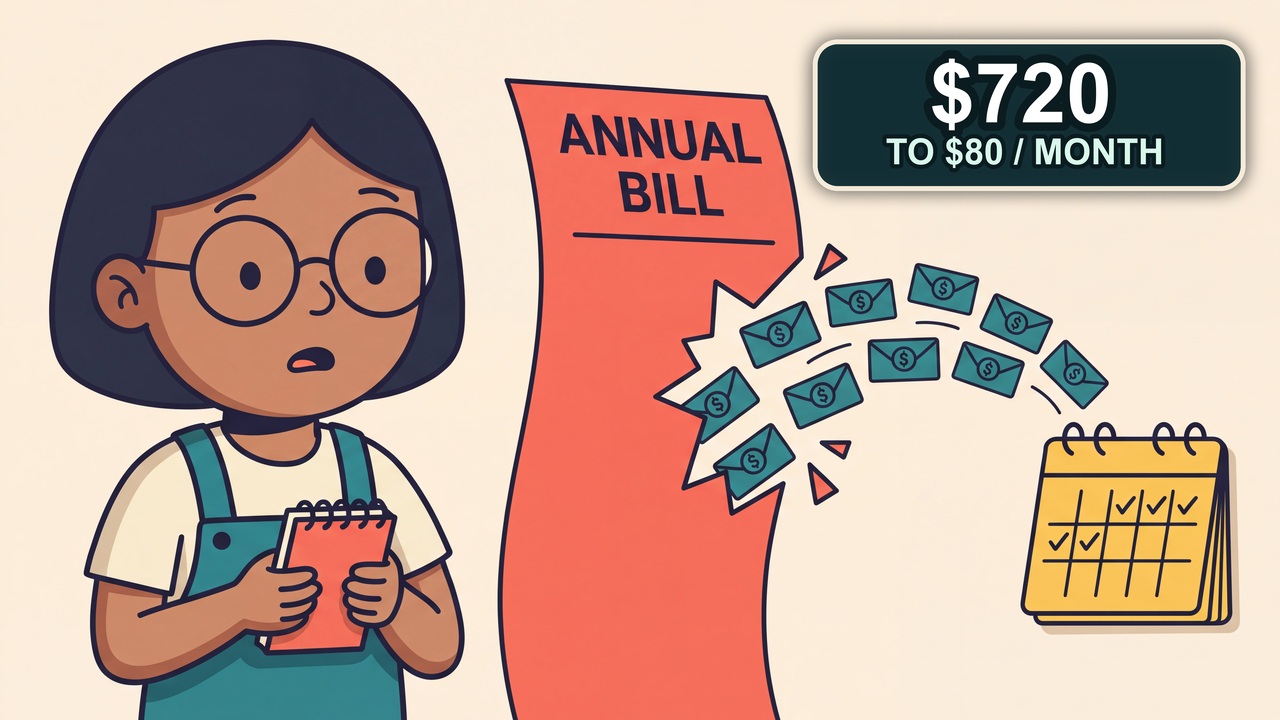
Les factures annuelles sont un problème mensuel (voici la solution)
Transformez une facture annuelle connue en versement mensuel : retirez l’épargne déjà mise de côté, divisez le reste par les mois restants et recalculez si le plan change.
 fiscal
Vidéos sur les finances / Budget et épargne
Distinguez urgences et dépenses prévues, fixez un premier palier d’épargne et reconstituez votre réserve après un retrait.
Vidéo en anglais
Charger ce lecteur envoie des données de connexion et de visionnage à Google/YouTube, qui peut utiliser des cookies ou technologies similaires. Le reste de la page fonctionne sans lui.
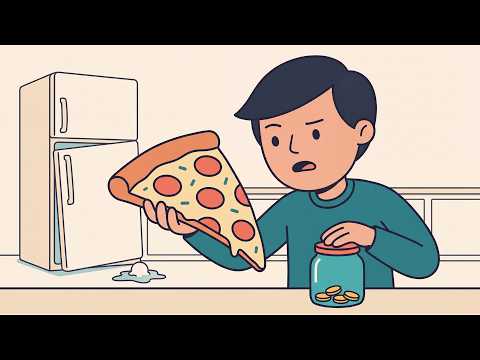
Détails sur la confidentialitéAlex’s fridge has quit. Leo suggests emergency pizza. The savings account would like a second opinion.
Join Alex, Maya, Leo, Nina and Ben for a practical guide to emergency funds: what counts as an emergency, what belongs in a sinking fund, how to start with a manageable savings milestone, and how to rebuild after using the money.
Worked examples follow Alex from a $100 starting balance to a $500 first milestone, then through a $180 fridge repair and a nine-week refill plan. These are illustrative amounts, not universal savings targets.
CHAPTERS 00:00 The fridge resigns 00:18 Budget, sinking fund, or emergency? 01:04 Three questions before spending 01:44 Start with a realistic milestone 02:32 Where to keep the money 02:51 Use it, then refill it 03:37 The pizza verdict
YOUR FIRST STEP • Choose a realistic first milestone. • Choose a safe, accessible place for the money. • Write your rule for when to use it.
Plan predictable expenses. Protect against financial shocks. Rebuild after using the reserve.
More Fiscal Nonsense: https://fiscalnonsense.com
RESOURCES CFPB — An essential guide to building an emergency fund: https://www.consumerfinance.gov/an-essential-guide-to-building-an-emergency-fund/ Financial Consumer Agency of Canada — Setting up an emergency fund: https://www.canada.ca/en/financial-consumer-agency/services/savings-investments/setting-up-emergency-funds.html
Original fictional characters. AI-generated voices and character animation, with locally animated teaching graphics and original sound effects. All amounts and situations are illustrative. General financial education; suitable targets and options depend on your circumstances.
#EmergencyFund #Budgeting #PersonalFinance #FiscalNonsense
Transformez une facture annuelle connue en versement mensuel : retirez l’épargne déjà mise de côté, divisez le reste par les mois restants et recalculez si le plan change.
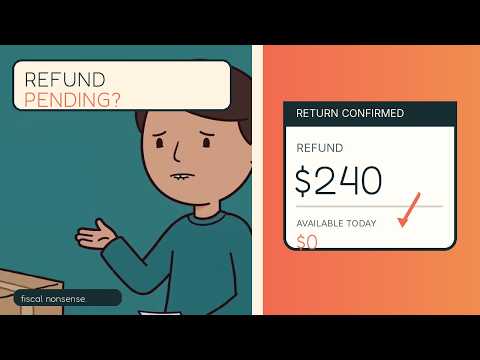
Un retour peut réduire un solde de carte, arriver en espèces ou devenir un avoir. Tant qu’il n’est pas crédité sur le compte qui le reçoit, il ne peut financer aucun autre plan.

Un prix au kilo inférieur peut coûter plus pour la quantité réellement utilisée. Comparez le sachet et le vrac, trouvez le seuil d’égalité et comptez les déplacements supplémentaires.