
Rembourser ses dettes ou investir ? Comparer les options
Comparez coût de l’emprunt, risque d’investissement, épargne de précaution et méthodes avalanche et boule de neige.
 fiscal
Vidéos sur les finances / Investissement et indépendance
Comprenez la capitalisation avec des conseils sur les versements, le réinvestissement, les frais et le risque.
Vidéo en anglais

Charger ce lecteur envoie des données de connexion et de visionnage à Google/YouTube, qui peut utiliser des cookies ou technologies similaires. Le reste de la page fonctionne sans lui.
Détails sur la confidentialitéAlex heard his money could make more money. He would like to speak to the manager about the delivery time.
Learn how compounding works, why time and affordable contributions matter, and which habits help or hurt. With Alex, Maya, Leo, Nina and Ben: practical do’s and don’ts on reinvesting, fees, diversification, inflation, debt and unrealistic return promises.
DO • Contribute consistently within your budget; automate if useful. • Reinvest earnings when appropriate for your goal and cash needs. • Compare total costs and check local tax/account rules. • Match risk to your timeframe, diversify suitably and review periodically.
DON’T • Invest emergency or grocery money in volatile assets. • Treat a calculator’s steady rate as a promised investment return. • Ignore expensive debt or borrow to chase guaranteed riches. • Chase recent winners, trade out of boredom, or assume overlapping funds spread risk.
ILLUSTRATIVE MATH All dollar amounts are teaching examples. Rates are assumed constant annual returns, compounded annually. No fees, tax, inflation adjustment or withdrawals in the growth examples. These are not forecasts or product recommendations.
1. $1,000 at 5%: $1,050 after one year; $1,102.50 after two. The second year earns $52.50 because the first year’s $50 remains in the balance. 2. Same $1,000, no extra deposits: $1,628.89 after 10 years; $2,653.30 after 20. 3. Starting from zero, $1,200 deposited at EACH YEAR-END for 20 years at 5%: $39,679.14. Contributions total $24,000; illustrative growth is $15,679.14. This uses annual, not monthly, deposit timing. 4. $10,000 over 20 years: $32,071.35 at 6% versus $26,532.98 at 5%, a difference of $5,538.38. This compares annual growth rates; it is not an exact calculation of a particular 1% asset-based fee. Actual fee timing and tax mechanics matter. 5. $1,000 × 1.20 × 0.80 = $960. Equal positive and negative percentages do not cancel when the balance changes.
CHAPTERS 00:00 Not an overnight delivery 00:25 Returns on returns 01:16 Do give time and contributions a job 02:11 Do keep more of what you earn 02:58 Do manage risk 03:31 Do not let the maths work against you 04:22 Make it repeatable
IMPORTANT CONTEXT Investment values can fall. Savings rates and crediting rules can change. Dividends are part of total return, not free extra money independent of price changes. Diversification cannot prevent all losses. Inflation affects purchasing power. Compounding can also increase debt where unpaid interest is added to the balance.
This guide is country-neutral. Laws, tax treatment, account terms and debt-interest rules vary. Check your actual terms and the relevant local regulator. Reinvesting and leaving money invested must fit your goals; planned withdrawals and sensible reviews are not failures.
More Fiscal Nonsense: https://fiscalnonsense.com
SOURCES FOR GENERAL CONCEPTS SEC — Interest on interest: https://www.sec.gov/investor/students/tips.htm Investor.gov — Asset allocation and diversification: https://www.investor.gov/introduction-investing/getting-started/asset-allocation Investor.gov — Fees and expenses: https://www.investor.gov/introduction-investing/general-resources/news-alerts/alerts-bulletins/investor-bulletins/updated Investor.gov — Protect your money: https://www.investor.gov/protect-your-investments/fraud/protect-your-money CFPB — Credit card contract definitions: https://www.consumerfinance.gov/data-research/credit-card-data/know-you-owe-credit-cards/credit-card-contract-definitions/
Sources describe their own jurisdictions; local legal rights and tax limits are not presented as worldwide rules.
Original fictional characters. AI-generated voices and character animation, locally animated teaching graphics and original sound effects. General education, not personalized financial advice.
#Compounding #CompoundInterest #PersonalFinance #FiscalNonsense
Comparez coût de l’emprunt, risque d’investissement, épargne de précaution et méthodes avalanche et boule de neige.
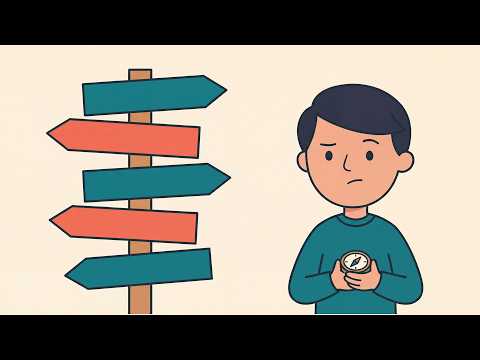
Explorez cinq voies vers l’indépendance financière. Dépenses, travail et hypothèses de retrait modifient le plan.
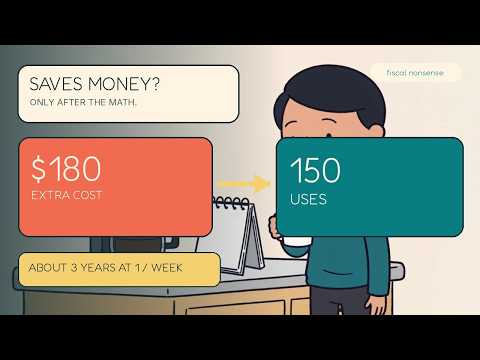
Un prix plus bas ne fait économiser que si l’économie réelle par utilisation rembourse le surcoût initial. Voyez comment un achat fictif met presque trois ans à atteindre son seuil de rentabilité.